 Game file / ROGUE BY ROGUE
Across the Obelisk
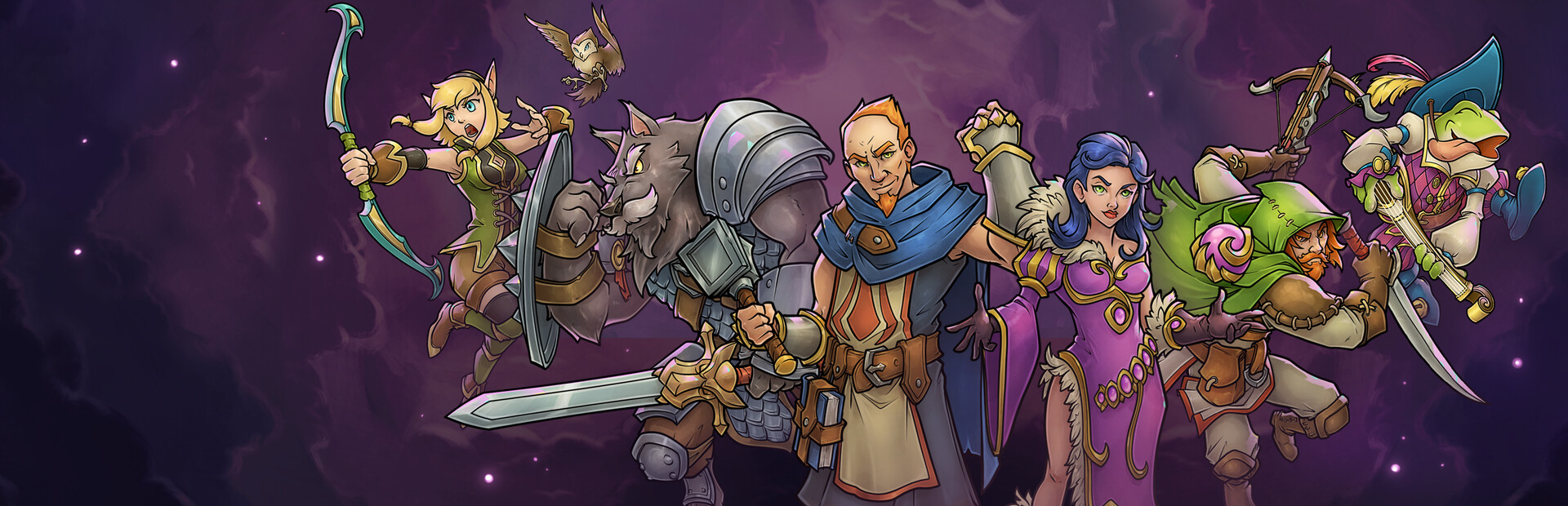
Set forth in a co-op roguelite deckbuilder where every choice matters! Craft decks of breathtaking power. Journey alone or with up to three friends. Plot your party’s path to glory and face powerful enemies in deep tactical combat on your quest to save the kingdom of Senenthia in Across the Obelisk!
Why this score?
Original text · Simplified Chinese
四套牌的团队协同与路线选择很有深度,代价是单人管理负担、平衡收窄和快照中的合作稳定性问题。
Core gameplay
Weight 25%8.0 / 10Original text · Simplified Chinese
四人队伍回合协作和分工有明确策略乐趣;单人同时管理四套牌增加决策负担和节奏停顿。
Builds & strategy
Weight 25%8.5 / 10Original text · Simplified Chinese
职业分工、制卡升级与状态协同提供丰富准备空间,但叠加增减益的优势挤压非主流组合。
Replayability
Weight 20%8.0 / 10Original text · Simplified Chinese
分支事件、职业选项与不同模式会改变路径,固定战役结构也让部分后续局趋于熟悉。
Randomness & fairness
Weight 20%7.0 / 10Original text · Simplified Chinese
队伍和牌组可提前配置,降低随机发牌的无助感;明显强弱路线和 DLC 能力膨胀削弱选择均等性。
Polish & usability
Weight 10%6.0 / 10Original text · Simplified Chinese
快照记载合作不同步、拖牌崩溃和分辨率重置,锁定奖励提示与复杂选人界面增加阻力。
- Reviewer
Original text · Simplified Chinese
Rogue by Rogue · AI 资料评测- Version reviewed
Original text · Simplified Chinese
具体构建未知;以所引资料描述的版本为准
Scope and limitations
Original text · Simplified Chinese
基于收录资料与官方页面的主观归纳,未进行试玩。资料覆盖多个 DLC 时期,未复现合作故障;只评价 DLC 提示和选择受限对玩法的影响,不按价格或发行商争议扣分。
Review sources 02
- 01Archived materialView archived external material ↓
Original text · Simplified Chinese
收录评论与社区资料(2026-10-01 快照)
使用 作者观点摘要 的 Tier list Part 1 (2023) 及 玩家好评与批评 中的机制、交互、重复与易用性反馈;未将外部分数或旧等级用于计算。
- 02Web sourceView original ↗
Original text · Simplified Chinese
Across the Obelisk 官方产品说明
2026-10-08 访问。确认四英雄单人/合作、职业组合、可升级卡牌与分支事件,以及独立随机草拟模式。 官方页面不单独证明平衡或稳定性。
Video reviews
Reviews and deep dives from YouTube and Bilibili, in every language. Open the original video to watch.
Other voices, for reference.
Archived third-party reviews and community material may refer to different versions. External opinions and ratings are presented separately; consult the original videos for their full context.
Community discussion
A co-op (1-4 player) roguelite deckbuilder/RPG by Dreamsite Games where you run a party of four heroes through a branching campaign map, crafting decks and stacking buffs against tactical enemies.
Steam shows Mostly Positive (about 80% of roughly 13,000 reviews). The base game is widely loved for its depth, co-op and replayability, and critics who reviewed it were favourable (3.5/5 to 4/5, 7/10 to 8.5/10) but noted that it is a solid genre entry rather than a genre great. The dominant recent complaint, in the most helpful negative reviews, is not the gameplay but Paradox's DLC monetisation: pricey DLC, locked DLC nodes and cards appearing in the base game, plus ongoing bugs and desyncs. It is not abandoned (a DLC-heavy release cadence continues), but several long-time players say meaningful free content and fixes have dried up and there is no sequel or mod support.
What players praise
- Very deep deck and party customisation: 16 base heroes across four roles, 500+ cards and 300+ items, with card crafting/upgrading and traits that enable many builds
- Co-op is a standout: each player controls a hero, which spreads the deck-building load and makes it a rare strong multiplayer deckbuilder; players report 250+ hours with friends
- Huge replayability from branching map paths, events with hero-specific options, Madness difficulty levels, extra modes and sandbox
- Distinctive art style and appealing original cast; lighthearted tone
- Big amount of content in the base game (100+ hours to see it all per multiple reviewers), so the $20 base is considered good value
- Meta-progression (unlocking cards, perks, heroes and their mini-quests) keeps runs feeling rewarding
What players criticize
- Aggressive DLC monetisation since the Paradox takeover: some DLC costs as much as the base game for a small amount of content, and new characters/skins are priced separately; full set is often quoted around $90+
- DLC content is baked into the map and card pools: flashing DLC-locked nodes that lead to a purchase prompt, and DLC cards offered as dead, unselectable rewards in the base game
- Stability problems: long-standing random crashes, reset resolution, and desyncs in co-op (card dragging, boss tactics, shopping) reported after newer DLC
- Balance is lopsided: buff/debuff stacking and scaling builds dominate, raw-damage and off-meta comps (e.g. 3 healers or 3 scouts) struggle, and some heroes have clearly optimal paths
- Campaign acts are largely fixed, so it is only semi-random; some players feel it is easier than Slay the Spire and lacks true roguelite variance
- Perceived lack of effort on the base game: no mod support and little substantial free content for years, with calls for a properly reworked sequel
- Character select UI redesign seen as clunky, and attempts to push the Paradox launcher drew complaints
- Recent DLC is criticised for heavy power creep, a clash in art style and arbitrary design that do not mesh with the base game, while the game is also described as having received no meaningful content for about 4 years
- Paradox-era business practices beyond DLC price: an unnecessary launcher and complaints about data collection, cited by long-time players (hundreds of hours) as the reason they no longer recommend the game
Distinctive features
- One of the first multiplayer roguelike deckbuilders, with every player piloting their own hero and deck
- Party-of-four RPG structure with Darkest Dungeon-style hero roles (warrior, scout, mage, healer) combined with Slay the Spire-style card play
- Energy carries over between turns (up to 10) rather than resetting, and heroes have equipment, traits and player-level perks
- Card crafting and upgrading with shards at the start of each act, plus hero unlock mini-quests and Obelisk corruption challenges
- Branching campaign map with persistent, semi-fixed content and Madness difficulty levels and sandbox modifiers
Divided opinions
- Whether the DLC is fair: some say it is optional, improving over time and worth buying on sale; others say it feels predatory and unavoidable because the holes show in the game
- Difficulty and roguelite-ness: some find it easier and more controllable than Slay the Spire, which they like, while others find the fixed maps and stacking too easy
- Whether it beats Slay the Spire: a few prefer it, others say it does some things better and some worse
- Whether the base game alone is worth $20 without DLC: many say yes, at least one reviewer with 300 hours says no
Repetition and friction
- Early-game grind: starting heroes are weak with limited deckbuilding until enough cards and heroes are unlocked, which one reviewer called a long and painful early game
- Building a deck solo takes a long time; several players recommend at least 2 players
- Constant reminders of missing DLC (flashing exclamation marks, locked characters) interrupting play
- Runs can become stale after a long time since acts are fixed and buff stacking trivialises content
- Bug-related interruptions such as crashes and desyncs, and the Paradox launcher push
Hoped-for improvements
- Bundle or cut prices of DLC, or make updates free, and stop promoting DLC inside the base game's map and card rewards
- Stop showing unselectable DLC cards in reward screens for non-owners
- Fix persistent crashes and co-op desyncs with proper testing before DLC releases
- Rebalance so that more than buff-stacking builds are viable and early-game starting heroes are less limited
- Add mod support and more free base-game content or a true sequel focused on core cards and classes
- Improve the character-select UI so all hero info can be seen without scrolling
Launched into Steam early access in 2021 (GamingOnLinux covered it in April 2021) and released 1.0 on Aug 16, 2022, praised as an engrossing co-op deckbuilder, with early balance and grind complaints. Publisher Paradox (Arc) took over and the game now has many DLC packs (Sands of Ulminin, Shores of Sahti, Sigrun the Valkyrie, Bernard the Alchemist and others); recent reviews skew negative about DLC monetisation even from long-time fans, dragging the overall rating to around 80%. Also on Switch and PlayStation/Xbox. Metacritic has no Metascore yet (it needs 4 critic reviews; only 2 shown), and OpenCritic lists 4 reviews without a displayed aggregate in what I could fetch. Revenue and owner numbers are third-party estimates, not audited.
Community sources
- Top helpful positive and negative English Steam reviews (local file) ↗
- Steam store data: review summary, tags, SteamSpy owners, revenue estimate ↗
- Steam store page ↗
- OpenCritic critic list: Screen Rant, PCMag, Capsule Computers, Thumb Culture ↗
- Metacritic user score 7.1 from 14 ratings, Softpedia 85 and PCMag 70, no Metascore yet ↗
- OpenCritic review excerpts surfaced by search (strengths and early grind) ↗
- 2021 early-access coverage of the co-op deckbuilder (via search result only) ↗
- Co-op listing for the game (via search result) ↗
- Steam community discussion on balance and early game (via search summary) ↗
- Revenue estimate based on Boxleiter method ↗
Archived creator commentary 1
Third-party summaries based on automatic captions may contain transcription or interpretation errors.
Tier list Part 1 (2023)
Across the Obelisk is a co-op-style deck-building roguelike where you control four characters at once. PepperHead uses it as the first deck builder of the list and talks about how the genre shares common gimmicks, so each game must build its own identity. He finds it complex and overwhelming for newcomers, but praises its engaging overworld and charming presentation. He rates it a solid A tier while cautioning that it is not for people new to deck builders.
What the creator praises
- Controlling four characters at once is its unique hook
- Outside-of-combat world and exploration feel engaging and immersive, like a real adventure
- Cute, fun art and animations, more lively than typical minimalistic deck-builder animations
- Many characters, cards and build possibilities once you have played a few hours
- Good balance between combat gameplay and the overworld/events layer
- One of the best deck-building games in his view
Issues raised by the creator
- Pretty complicated with a lot of information, overwhelming for beginners
- Managing four characters and their placement adds to the overload
- Not recommended if you are not used to deck-building games
Design observations
- Four characters played simultaneously, with placement management a big part of play
- Design lesson: deck builders need a good balance between card combat and the outside world; this one nails the outside world