 Game file / ROGUE BY ROGUE
Nova Drift
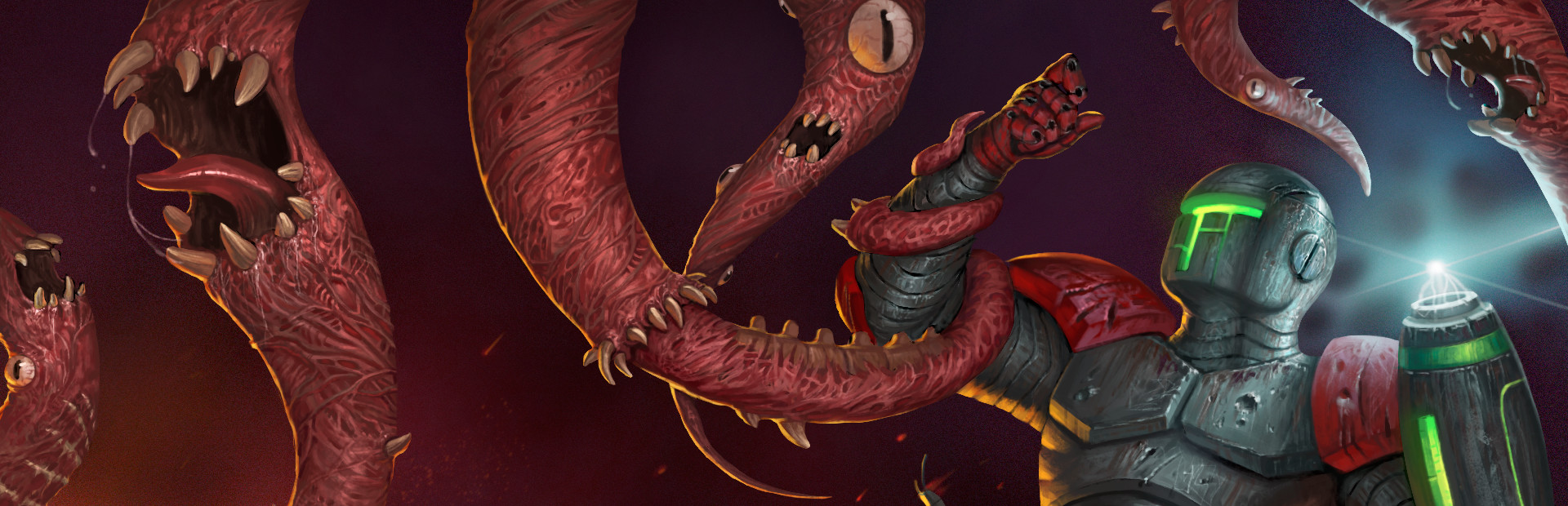
Nova Drift distills the mechanical depth and strategy of an ARPG into classic arcade space combat. Control an endlessly evolving bio-mechanical ship, face legions of strange and deadly foes, and ride the wake of a dying star across the void.
Our score
Eligible for ranking after all five dimensions are reviewed
Game filed. Review coming soon.
This game has not yet completed our five-dimension review. Explore its details and external material in the meantime.
Video reviews
Reviews and deep dives from YouTube and Bilibili, in every language. Open the original video to watch.
Other voices, for reference.
Archived third-party reviews and community material may refer to different versions. External opinions and ratings are presented separately; consult the original videos for their full context.
Community discussion
An Asteroids-style arcade space shooter with momentum-based movement, rebuilt as an action-RPG roguelite where you chain 200+ modular upgrades into absurd ship builds over roughly 120-wave runs.
Nova Drift is received very warmly by players: Steam shows about 14,000 positive vs 650 negative reviews (95.6%, Overwhelmingly Positive), with a recent-30-day slice slightly lower (Very Positive, 89% on a small sample). It spent years in Early Access (March 27, 2019) before its 1.0 launch on August 12, 2024 (price $17.99, Windows and Mac). Critic coverage is thin: Metacritic has no Metascore yet (only 2 critic reviews posted, Hardcore Gamer 80 and a Polygon entry without a number), and Game Informer is quoted on the store page as praising the unlocks and customization. Praise centres on build variety, feel and sound; criticism centres on the unorthodox tank-style controls, a gentle early difficulty curve, and repetitive enemy/arena variety.
What players praise
- Enormous build variety: 200+ mods across weapons, shields, bodies and 'super' upgrades that chain into wild synergies (homing fragmenting missiles, shield thrown as a blade drone, bullet-ship builds)
- Satisfying audio and visual feedback: reviewers call out the SFX, soundtrack, clean neon look and screen-filling explosions
- Inertia-based drifting movement feels distinctive and rewarding once it clicks, reminiscent of classic Asteroids
- Plenty of replay hooks: endless mode, draft mode, boss rush, daily challenges and stackable mode modifiers that act as custom difficulty
- Runs are short and decision-dense (about 30-40 minutes, around 30 upgrades), good for 'one more run' sessions
- Meta-progression unlocks steadily add new mods and super mods, so the game keeps changing as you learn it
- Good value and accessibility: cheap for the content, runs well on old hardware, controller support praised by some despite a 'Mostly Playable' label
- Scales from chill score-chasing to punishing high difficulty, with hard achievements for veterans
What players criticize
- Movement/steering (rotate and thrust, no twin-stick aiming, no move-backwards) is the most common reason players bounce off or refund; several negative reviews cite controls alone
- Enemy and arena variety is seen as thin: same empty space, recycled wave formations, and few genuinely threatening enemies
- Early difficulty levels are too easy, so some players feel they have 'beaten' it within a couple of runs before mutators unlock the real challenge
- Balance is lopsided in places: a few reviewers say missiles (or a handful of builds) are the only viable route for very deep runs, and many perks are narrowly specialised
- Some deaths feel cheap, e.g. being one-shot by enemies with extreme modifiers
- Controller polish gaps: no sensitivity setting, limited control customisation
- Occasional technical complaints: performance troubles on some machines, launch issues with certain capture hardware, Linux support dependent on Proton
Distinctive features
- Fuses ARPG-style build theorycrafting with Asteroids-style arcade physics, an unusual mix in the roguelite shooter space
- Ship is assembled from interchangeable weapon, shield and body parts with deep interaction rules rather than generic stat boosts
- Score-attack/leaderboard framing rather than a story-driven goal, with mode modifiers letting players author their own difficulty
- Momentum and collision physics matter: you can ram, use shields as weapons, or turn yourself into the projectile
- Small-studio project (Chimeric, published by Pixeljam) with a long Early Access road and active community feedback loop
Divided opinions
- Movement: many call the inertia-based controls the heart of the game; others find them unintuitive or worse than twin-stick and leave
- Difficulty: some say it is too easy even with modifiers enabled, while others call late tiers and endless very hard
- Post-1.0 direction: at least one negative reviewer blamed the 1.0 planning and the developer's Discord community for decisions they disliked, though this is a single player's view and most reviewers are positive
- Depth vs repetition: fans see near-limitless builds, sceptics see the same handful of strong builds repeated
Repetition and friction
- Grinding through meta-unlocks before the best mods and harder mutators appear, which some call slow and others accept as pacing
- Runs can feel samey because arenas are empty space and wave types repeat, leading some players to drop off after 5-10 runs
- Endless mode after the final boss feels like the same bosses plus more enemies, with little new content
- Score-chasing focus does not suit players who want a final goal or narrative progression
- Steering learning curve: newcomers often describe the first runs as awkward until drifting becomes second nature
- Some find heavy projectile and effect spam visually noisy
Hoped-for improvements
- Add controller sensitivity options and broader control remapping, plus alternative control schemes (twin-stick or a reverse/brake input)
- More bosses and more enemy/arena variety so later runs feel less repetitive
- Better onboarding: the practice run is progression-locked and gives little reward, and the UI shows upgrades that are not yet unlocked without explaining why
- Tune difficulty so early tiers are more engaging and weaker weapon families are competitive in deep endless runs
- Smooth out the time-to-unlock for the strongest super mods, which one reviewer says takes a while
- Add a multi-point/bulk upgrade option and more customisation, which players request on the Steam forums
Early Access launched March 27, 2019 and the game built a loyal following over roughly five years; 1.0 shipped August 12, 2024. Steam community review sentiment stays overwhelmingly positive; the negative reviews are mostly about controls, repetition and controller options, plus one review criticising the developer community around the 1.0 design process. Metacritic lists no Metascore (needs more critic reviews) and OpenCritic could not be confirmed, so critic consensus is light. The steam-revenue-calculator.com estimate (Boxleiter-style, unaudited) puts gross revenue near $11.2M and net near $3.3M, and SteamSpy-style data suggests 200k-500k owners, both order-of-magnitude figures. Steam lists Windows and Mac; the Steam forums mention Proton support being restored for Linux. Note: the web-search tool budget was exhausted during research, so Reddit and several outlet pages could not be read directly and community detail leans on the Steam review file and Steam forum/store pages.
Community sources
- Top helpful positive and negative English Steam reviews (local file) ↗
- Local Steam store metadata: appid 858210, review counts, SteamSpy owners, revenue estimate ↗
- Steam store page: EA March 27 2019, 1.0 Aug 12 2024, features, press quotes (Game Informer, Hardcore Gamer, Manablast), review summary ↗
- Metacritic: no Metascore yet, 2 critic reviews (Hardcore Gamer 80, Polygon unscored), user score 7.4 on 7 ratings ↗
- Metacritic user reviews page (very few ratings) ↗
- Steam forums: performance/launch issues, controller connectivity, Proton, balance complaints, feature requests ↗
- Unaudited gross ($11.16M) and net ($3.29M) revenue estimate ↗
- Official site: 200+ upgrades, modes, developer and composer credits ↗
Archived creator commentary 1
Third-party summaries based on automatic captions may contain transcription or interpretation errors.
Tier list Part 2 (2024)
Nova Drift is a space shooter where you pilot a ship, move and shoot, and constantly pick up upgrades. The basic controls are simple but feel very satisfying. Builds are defined by the weapon and core mechanics chosen at the start of each run, which works like choosing a different character. He finds the content thin and repetitive, but the variety of builds keeps it fun. He expects to return to it every few months and places it at the top of B tier.
What the creator praises
- Very satisfying core gameplay despite minimal mechanics (move and shoot)
- Abilities and upgrades arrive constantly, with frequent level-ups offering many options
- Choosing weapon and core mechanics at the start acts like picking a different character each run
- Many distinct builds (swarm of tiny ships, sniper, high fire rate) that feel different enough to offset repetition
- Visually appealing and enjoyable to replay every now and then
- Does what it set out to do very well
Issues raised by the creator
- Gameplay is very repetitive
- Not a huge amount of content to discover
- Level design and enemy design are limited
- Many bosses, but most are seen after about four runs
Design observations
- Run identity comes from the three core mechanics/weapon chosen at the start rather than from distinct ships
- Build variety is the main thing that counters repetition in a simple shooter