 Game file / ROGUE BY ROGUE
Scourge Bringer
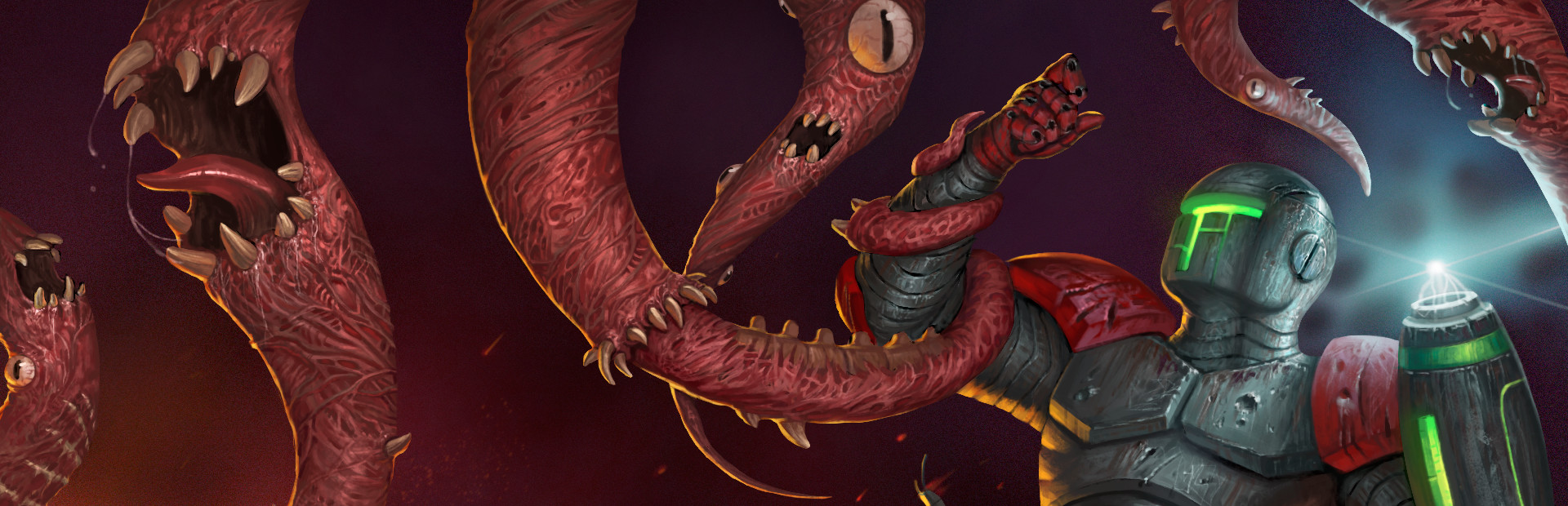
ScourgeBringer is a fast-paced free-moving roguelite platformer. Help Kyhra to explore the unknown and slash her way through ancient machines guarding the seal of her past, and maybe the redemption of humanity.
Our score
Eligible for ranking after all five dimensions are reviewed
Game filed. Review coming soon.
This game has not yet completed our five-dimension review. Explore its details and external material in the meantime.
Video reviews
Reviews and deep dives from YouTube and Bilibili, in every language. Open the original video to watch.
Other voices, for reference.
Archived third-party reviews and community material may refer to different versions. External opinions and ratings are presented separately; consult the original videos for their full context.
Community discussion
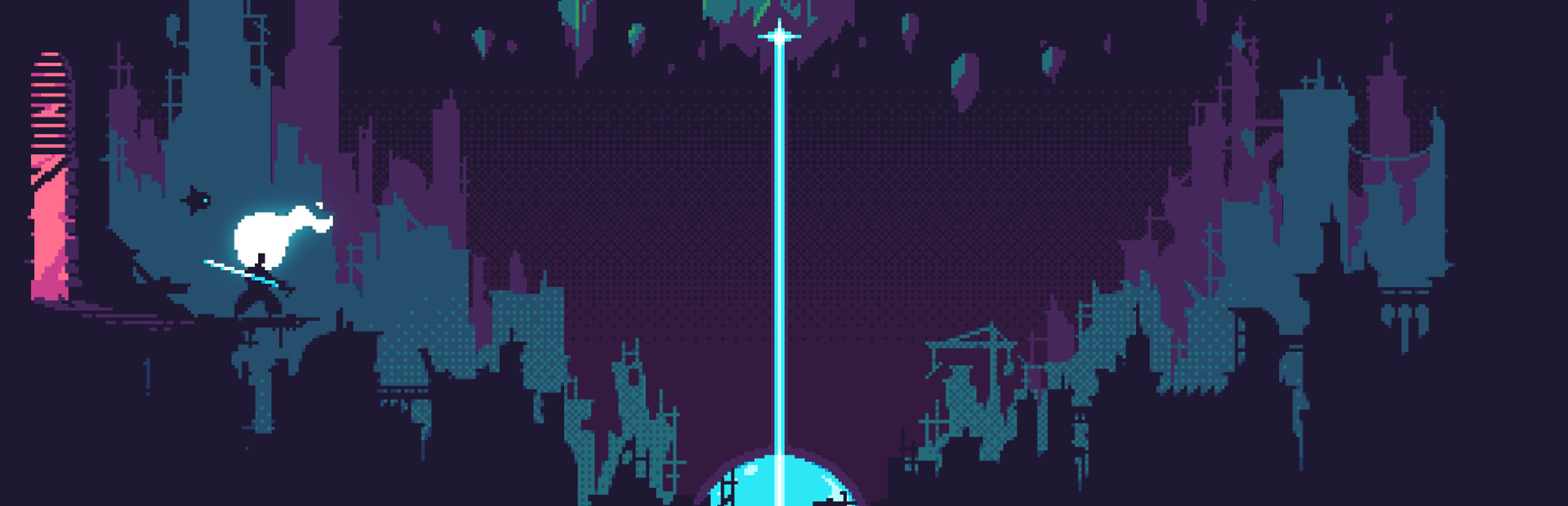
A fast, free-moving 2D pixel-art roguelite platformer by Flying Oak Games and E-Studio where Kyhra dashes, slashes, parries and stomps through five realms of machine enemies and hand-made bosses.
ScourgeBringer is well regarded for its movement and combat feel. Steam is Very Positive (about 86% of roughly 3,300 reviews), and Metacritic critics average 76 from 13 reviews, with the top scores around 90. Players and critics agree the flow and the soundtrack are excellent, and that the game is brutally hard and fairly thin as a roguelite, with little build variety, few items and five repetitive realms. The Metacritic user score is a much lower 5.8 (Mixed) from only 29 ratings, and difficulty and grind drive most of the negative Steam reviews. It left Early Access in October 2020 and later reached consoles and mobile. Recent Steam reviews from 2025-26 are still mostly positive, and the game is often discounted to very low prices.
What players praise
- Movement and combat feel: fluid dash, slash, parry, stomp and projectile-smashing that reviewers compare to Celeste, Hotline Miami and Mega Man
- Enemies only hurt during actual attacks (no contact damage), which players like in a fast game
- Skill-based bosses: players say they can't be beaten by raw stats or a lucky build, so wins feel earned
- Soundtrack by Joonas Turner is widely called a standout, and several reviewers bought it separately
- Pixel art, effects and Kyhra's character design are praised, as is the story's mystery and the quirky EULA with a pizza recipe
- The permanent skill tree is satisfying to upgrade and gives a sense of progress between runs
- Realm-specific mechanics and cool weapons such as lasers add variety within the five realms; players like discovering mechanics without tutorials
- Accessibility options (slower game speed, slower bullets, extra health drops) let more players enjoy the game
What players criticize
- Extreme difficulty: many negative Steam reviews from experienced players say they stalled at realm 3 or the first boss after 7-20 hours
- Shallow roguelite variety: few in-run items, little synergy, so runs feel alike
- Only five realms that must be replayed from the start every run, which leads to repetition
- Screen chaos: many enemies, bullets and heavy effects make it hard to see your character or threats, especially in the later realms
- Health is a scarce resource and getting hit cuts your blood multiplier, which pushes play toward no-hit runs
- Some players report clunky or unfair controls: a slow heavy attack and parry, auto-aim on dash and shots that can't be disabled, enemies dragged along by a dash, and hitstun
- Late skill-tree unlocks feel weak, and maxed players pile up blood currency with nothing to spend it on
- Smaller complaints: some controllers are not supported natively, and one long-session crash report on a modern PC
Distinctive features
- A free-flying, Celeste-style movement roguelite where parrying and smashing bullets matter more than build luck
- A skill-over-loot design: power comes mostly from player mastery, with the permanent skill tree adding smaller boosts
- Hand-designed boss fights, unlike the procedurally generated bosses in the developers' earlier NeuroVoider
- A blood resource with a kill-streak multiplier tied to health, which makes the health bar a risk-reward currency
- Accessibility sliders for game speed and bullet speed
Divided opinions
- Difficulty: fans call it fair and rewarding while others with years of roguelike experience call it unfair
- Roguelite depth: some love the arcade purity and skill focus, others want more builds and progression
- Metacritic critics (76) and Steam (about 86%) are far warmer than Metacritic users (5.8 from 29 ratings)
Repetition and friction
- Redoing the same early realms after every death, with no shortcuts, to reach the harder later content
- Grinding blood for the skill tree early on, and feeling gated until you unlock key skills such as deflection
- Runs becoming repetitive after a few hours because of limited items and enemy/room variety
- Dynamic or adaptive difficulty that some players find confusing, or that does not make the game easier enough
- Late realms where chaotic screens make fights feel like mashing buttons
- Short-lived progression: the skill tree is fun until it is maxed out quickly, after which the game feels like pure 'git gud' repetition
Hoped-for improvements
- More in-run items, weapons and synergies so runs differ more, and more realms or level variety
- Fairer defensive tools: i-frames on the dash, a faster heavy attack and parry, or a bigger or upgradeable parry window
- Clearer combat visuals, such as toned-down effects and better enemy readability in realms 3-5
- More frequent or reliable healing, and options to disable dash and shot auto-aim and to remove hitstun
- A structure with fast travel or a more connected, metroidvania-style world that unlocks abilities through progress (one reviewer suggested this)
- More meaningful skill-tree upgrades so maxing it out is not anticlimactic, and better communication of how hard the game is
Early Access began in February 2020 and the full release was on 21 October 2020 (PC, Xbox One, Switch), followed by PS4/Vita in April 2021, PS5 in April 2022 and iOS/Android in September 2022 (per Wikipedia). Critics praised the fluid controls and combat from the start but noted thin progression and depth. Metacritic PC critic score is 76 from 13 reviews; the Metacritic user score of 5.8 has only 29 ratings. Steam reviews are still arriving in 2025-26 and mention an adaptive or dynamic difficulty system added after launch that not everyone finds helpful. OpenCritic could not be located and is left null. Steam price is $16.99 but it is frequently on deep sale ($2). Revenue estimates from steam-revenue-calculator.com (Boxleiter method, rough) put gross at about $301k and net about $89k on Steam alone. Its copies field is empty, and SteamSpy suggests 200k-500k owners, which likely includes bundles and giveaways.
Community sources
- Local file of top helpful positive and negative English Steam reviews for ScourgeBringer, read in full ↗
- Local Steam data: appid 1037020, release date, tags, review counts, SteamSpy owners, revenue estimate ↗
- Steam store page: description, tags, features (fetched page showed slightly different review counts than local data) ↗
- Metacritic page: Metascore 76 from 13 critics, user score 5.8 ↗
- Metacritic PC critic reviews list with outlets and scores ↗
- Metacritic user reviews: distribution and common complaints ↗
- Development background, platforms and release dates, critical reception summary ↗
- Steam discussions hub: bug/startup threads, controls and Steam Deck questions, developer roadmap ↗
- Third-party Steam revenue estimate (Boxleiter method) ↗
Archived creator commentary 1
Third-party summaries based on automatic captions may contain transcription or interpretation errors.
Tier list Part 1 (2023)
Scourgebringer is a very fast-paced action roguelike with a hub world of permanent upgrades. He thinks it looks great, sounds great and feels fantastic at its core, but his main issue is that every run plays nearly the same. He believes it should have been a metroidvania-style game rather than a roguelike. He has tried it several times to convince himself it is great, and concludes it may be great but not for him, placing it at the top of C tier.
What the creator praises
- Visuals look great
- Music is great
- Core movement and combat feel really cool, especially when a run starts
- Hub-world upgrades unlock some really cool stuff
- Flashy and enjoyable for the first few hours
- The story is pretty cool
Issues raised by the creator
- Every run feels exactly the same despite different guns and abilities
- Altar upgrades and abilities are not impactful enough relative to each other
- You always face the same enemies the same way (dash and shoot), so it gets tiring
- Randomness is a problem because the build never really changes
- Very hard; he did not finish it
Design observations
- Design lesson: player should start much weaker (no dash etc.) and gain more, more impactful upgrades during the run so builds differ
- Argues the design would suit a metroidvania better than a roguelike