 Game file / ROGUE BY ROGUE
Skul the Hero Slayer
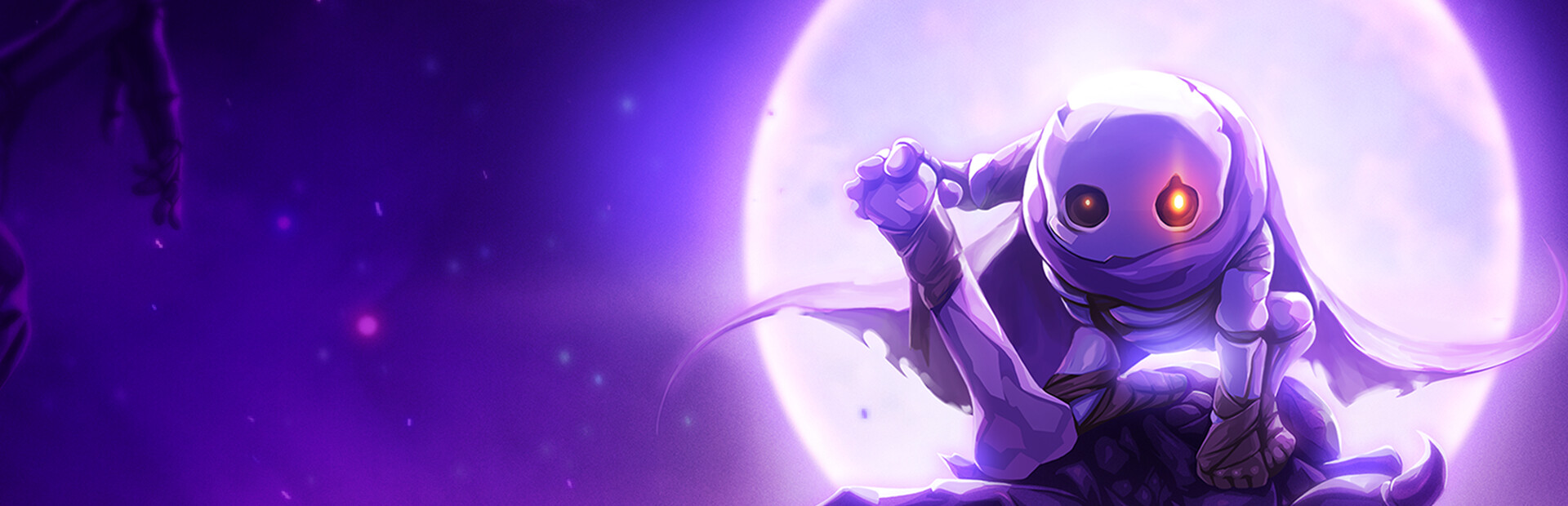
Guide 'Skul' on his quest to single-handedly take on the Imperial Army and rescue his King from captivity, in an action-packed rogue-lite 2D platformer for the ages.
Why this score?
Original text · Simplified Chinese
头骨同时承担角色与装备的功能,使构筑和动作互相影响;重复开局和战斗可读性限制整体表现。
Core gameplay
Weight 25%8.0 / 10Original text · Simplified Chinese
双头骨即时切换带来不同攻击距离和节奏,清敌反馈强;部分首领耗时长、特效拥挤会削弱控制感。
Builds & strategy
Weight 25%8.5 / 10Original text · Simplified Chinese
头骨升级、两套动作与物品和精华联动提供实际路线选择,构筑能改变打法;关键头骨和物品是否出现仍限制调整。
Replayability
Weight 20%7.5 / 10Original text · Simplified Chinese
不同头骨要求重学操作与组合,重玩变化充分;固定首领和早期弱头骨的重复开局降低了遭遇层面的变化。
Randomness & fairness
Weight 20%6.5 / 10Original text · Simplified Chinese
首领动作能通过练习学习;资料同时反映掉落依赖、后期伤害墙与视觉遮挡,难以始终准确判断风险。
Polish & usability
Weight 10%7.0 / 10Original text · Simplified Chinese
像素动作和低配置表现得到社区肯定,但键盘映射、冗长说明和技能特效的信息噪声增加使用阻力。
- Reviewer
Original text · Simplified Chinese
Rogue by Rogue · AI 资料评测- Version reviewed
Original text · Simplified Chinese
具体构建未知;以所引资料描述的版本为准
Scope and limitations
Original text · Simplified Chinese
未进行试玩;分数是依据已收录评述与社区具体反馈作出的主观资料评测。旧反馈跨版本、部分原始材料为不可重开的本地快照;本次 Steam 核查仅确认玩法与功能,未复测平衡、性能或报告的故障是否仍存在。
Review sources 02
- 01Archived materialView archived external material ↓
Original text · Simplified Chinese
收录评论与社区资料(2026-10-01 快照)
使用 作者观点摘要 的 Tier list Part 1 (2023) 的具体优缺点,以及 玩家好评、玩家批评 与 资料核查说明;不使用旧等级、外部分数或销量反推。
- 02Web sourceView original ↗
Original text · Simplified Chinese
Skul the Hero Slayer · Steam 官方商店
2026-10-08 访问。Steam 商店核对携带两种头骨、战斗中切换及各自不同的攻击距离、速度和力量。未据商店介绍推定性能或故障已修复。
Video reviews
Reviews and deep dives from YouTube and Bilibili, in every language. Open the original video to watch.
Other voices, for reference.
Archived third-party reviews and community material may refer to different versions. External opinions and ratings are presented separately; consult the original videos for their full context.
Community discussion
A 2D action roguelite platformer by SouthPAW Games (published by Neowiz) where you play a skeleton who swaps between dozens of skull 'classes', each with its own attacks and skills, to fight the human Imperial Army.
Skul is received as a very good, Dead Cells-adjacent action roguelite: Steam shows Very Positive (about 93% positive across roughly 57,700 reviews in the local data; about 92% in the store's English/recent view) and Metacritic has a Metascore of 80 from 22 critics. Praise centers on the skull-swapping combat, build variety, pixel art and surprisingly good story. Criticism is that it is punishing with a steep difficulty curve, heavily RNG-driven, and repetitive once the novelty fades, with clunky keyboard controls and screen clutter. The Metacritic user score is noticeably lower (7.0, Mixed) than Steam, suggesting the harder-edged/grindy side bites some players. It is not abandoned: after 2020 early access and the Jan 2021 full release, it got console ports, a Mythology Pack DLC, mobile versions (2024), and Steam reviews still run 'Very Positive' recently; Wikipedia reports over 2 million copies sold by Dec 2023.
What players praise
- Skull-swapping is the core hook: you carry two skulls at once and swap mid-combat, and each skull (Grim Reaper, Davy Jones, Monkey King, etc.) plays very differently, so runs feel distinct.
- Large variety of skulls, items and Quintessences that interact with each other, giving real theorycrafting and build depth; some players report hundreds of hours without feeling stale.
- Pixel art and sprite work are repeatedly called beautiful and detailed, with distinct visual themes per zone and memorable bosses.
- Story and tone surprised many reviewers for an action roguelite; several say it is emotional and has twists, with a serious-but-charming tone compared to Dead Cells' wackiness.
- Bosses start out feeling impossible but become learnable pattern fights that players describe as rewarding.
- Runs well on low-end PCs and on Steam Deck, even though it is not officially verified there; Steam reviewers report 40+ hours with excellent performance.
- Post-launch content is well regarded: one reviewer says the Mythology Pack DLC added four new skulls plus a very strong legendary skull; the soundtrack is also singled out as fitting the theme.
What players criticize
- Difficulty is steep and unforgiving, with no easy mode; many negative reviews cite hitting a wall at bosses or around zone 4 and quitting.
- Heavy RNG in items and skulls can make good builds hard to assemble and can doom a run outright.
- Repetition: same enemies and layouts across runs, and meta-upgrades feel slow or small after the first hours, which produces 'fun for a few hours then a grind' reviews.
- Keyboard controls are widely described as poor (remapping needed); controller is strongly preferred.
- Screen clutter and over-animated skills/effects can cover much of the screen and make dodging hard; some call combat feel floaty or lacking weight.
- Balance and pacing issues: some bosses take far too long (one reviewer spent 10 minutes in a single fight) and some players call the balancing and screen clutter among the worst they have seen.
- Some item and system descriptions are overwhelmingly long or poorly explained, and build-enabling mechanics are not well signposted in-game.
Distinctive features
- The playable character is a skeleton who swaps heads: each skull is effectively a class with its own moveset, and you hold two at once and switch mid-fight.
- Skull rarity tiers plus a growing roster from bosses and story (including fan-favorite legendary skulls) create a collect-and-mix loop unlike most 2D roguelites.
- Quintessences (active items) and item synergies sit on top of the skull system for a three-layer build structure.
- Dark Quartz corruption adds a challenge layer for late-game and boss encounters.
- A darker, more serious narrative with a villain-adjacent twist on the fantasy trope of heroes versus monsters, which reviewers say is more story-driven than typical roguelites.
Divided opinions
- Difficulty: fans love the challenge and mastery, while others want an easy mode and feel punished; many players drop off around zone 4.
- Build restrictiveness and RNG: praised as replayable variety by some, called a love-it-or-hate-it restrictive build system by others.
- Combat feel: some call it satisfying and simple-yet-deep, others say it is clunky, loose, floaty and lacks impact.
- Comparison to Dead Cells: some say it is on par or more fun, while others say Dead Cells is clearly better.
Repetition and friction
- Restarting from the very beginning after losing to a boss, fighting the same early enemies again, which several reviewers call exhausting.
- Grinding for upgrades between runs; one player says multiple runs are needed per upgrade after about nine hours.
- Long boss fights with heavy health pools (one reviewer describes a ten-minute fight).
- Reading dense item and inscription text, and needing fan guides to understand builds.
- Level layouts and enemy sets feeling repetitive across zones and runs.
Hoped-for improvements
- Add an easier or assist difficulty, or a gentler on-ramp, for players who want the content without the punishment.
- Better in-game explanation of systems (Quintessences, inscriptions, item synergies) with shorter, clearer descriptions so players do not need outside guides.
- Reduce run-killing RNG through more reliable ways to shape builds and more useful low-tier items.
- Improve default keyboard layout and controls, and lower screen clutter or add effect-reduction options.
- Faster, more meaningful meta-progression so early failed runs feel less like a repetition loop.
- More big content updates; one reviewer says the only issue is the lack of major updates.
Early access launched Feb 2020 and the 1.0 release followed in Jan 2021 on PC, with console versions in Oct 2021 and mobile in 2024 per Wikipedia. Wikipedia reports over 1 million copies by Jan 2022 and over 2 million by Dec 2023; the local SteamSpy-style estimate of 1-2 million Steam owners and a steam-revenue-calculator estimate of about $46.9M gross / about $13.8M net are rough Boxleiter-style figures, not audited. Wikipedia cites IGN comparing it to Dead Cells and Majora's Mask and Polygon liking the combat while noting translation issues. Mythology Pack DLC adds extra skulls; Steam lists it as a Player Favorite. Steam recent reviews remain Very Positive, so there is no review-bomb or abandonment signal, though some players wish for larger updates. Not officially Steam Deck verified, but players say it runs well. OpenCritic score could not be retrieved (web search budget was exhausted and a guessed OpenCritic URL returned the wrong game), so it is left null.
Community sources
- Top helpful positive and negative English Steam reviews (local file) ↗
- Local Steam/SteamSpy/revenue-calculator data for appid 1147560 ↗
- Steam store page: review summary, DLC, features ↗
- Metacritic: Metascore 80 (22 critics), user score 7.0, outlet scores ↗
- Wikipedia: reception, sales milestones, platforms, development history ↗
- Estimated gross/net revenue (Boxleiter-method estimate) ↗
Archived creator commentary 1
Third-party summaries based on automatic captions may contain transcription or interpretation errors.
Tier list Part 1 (2023)
Skul: The Hero Slayer is a traditional 2D action roguelike where you play a small skeleton who swaps skulls, each with a distinct playstyle and abilities. He finds it fast, explosive and very satisfying, and he has kept playing since release, including a paid expansion DLC. His main complaints are a repetitive early game with the same starting skull, limited pre-run customization, and reused bosses across worlds. He places it firmly in A tier, above Have a Nice Death and roughly just under FTL.
What the creator praises
- Swapping between skulls gives constantly new playstyles, and you can hold two at once
- Combat is hack-and-slash with many enemies, big explosions and a strong sense of power
- Large pool of items, each with unique abilities and randomized enchantments
- Skulls can be upgraded multiple times, unlocking new abilities
- The paid DLC added many features and a whole new world
- Cute music, appealing art and a story he likes
Issues raised by the creator
- Once all skulls are seen, the game gets somewhat repetitive
- Pre-game customization is limited and every run starts with the same skull
- The first world gets tiresome with the same weak starting skull and tiny abilities
- Every world has the same bosses; he wants more variety
Design observations
- Character-as-resource design: swappable skulls act as different characters within one run
- Randomized item enchantments layered on top of unique item abilities add build variety