 Game file / ROGUE BY ROGUE
Barony
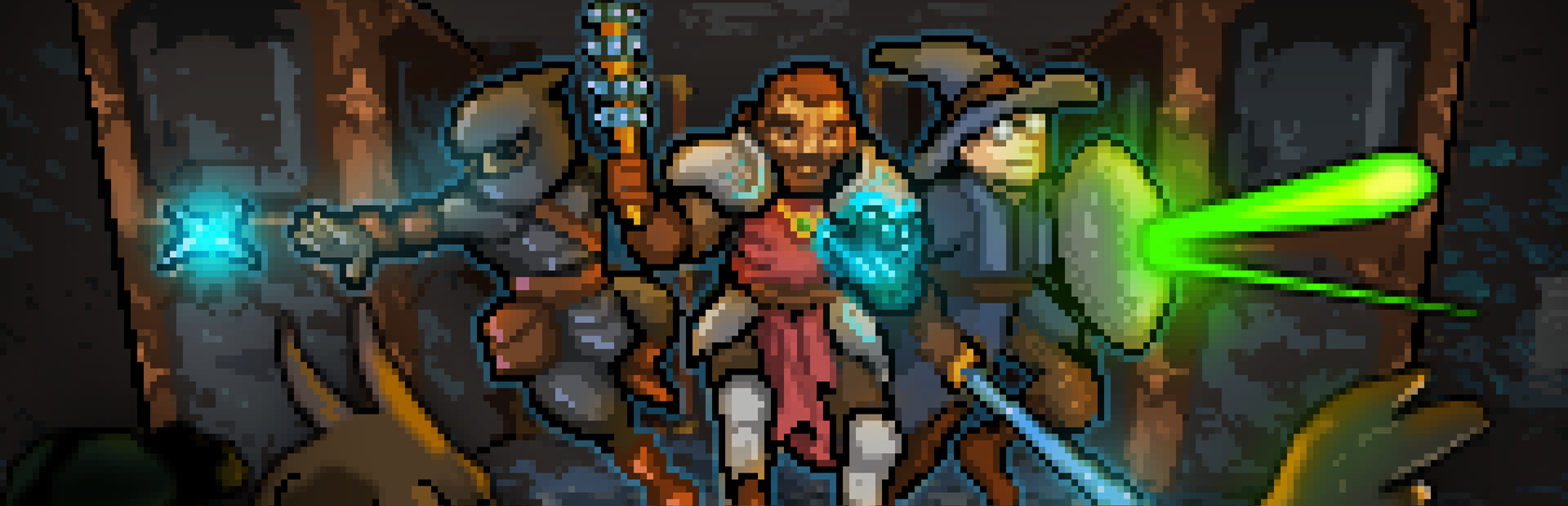
Barony is the premier first-person roguelike with cooperative play! Adventure alone, or gather a party with iconic and unusual RPG classes to face off against the brutal dungeons. Test your resourcefulness, wits, and friendships, on your quest to lift the evil lich's curse!
Our score
Eligible for ranking after all five dimensions are reviewed
Game filed. Review coming soon.
This game has not yet completed our five-dimension review. Explore its details and external material in the meantime.
Video reviews
Reviews and deep dives from YouTube and Bilibili, in every language. Open the original video to watch.
Other voices, for reference.
Archived third-party reviews and community material may refer to different versions. External opinions and ratings are presented separately; consult the original videos for their full context.
Community discussion
A first-person, voxel-style dungeon-crawling roguelike from Turning Wheel with 1-4 player co-op, inspired by NetHack, Ultima Underworld and Hexen-era RPGs.
Barony is well loved by players: Steam shows Very Positive (about 90.7% of roughly 18,200 reviews) and many long-time players with hundreds of hours call it a genre standout, especially in co-op. Critic coverage is thin; OpenCritic lists only two mid-tier critic reviews (7/10 and 7.1/10, averaging 7.05, both for the Switch port) and Metacritic has no Metascore, only a small user score of 7.5 from 45 ratings. The game is still being developed a decade after launch (new DLC and a large systems overhaul), and the most recent wave of negative Steam reviews is largely about that overhaul, not the original design. Common complaints are steep, sometimes unfair difficulty (especially solo), long runs with no meta-progression, and races and classes sold as paid DLC.
What players praise
- Co-op is the main draw: up to 4 players (online, LAN, split screen), and the party dynamic and class mix is what the game is balanced around
- Deep, interlocking NetHack-style systems (item identification, cursed gear, alchemy, skills, magic, traps) that reward accumulated knowledge across runs
- High replayability from many classes, races, gear and spells, plus Steam Workshop mods and adjustable difficulty/assist options
- Charming retro voxel look, humor (cream pies, chat callouts, RPG-Maker-style sound effects) and a nostalgic Hexen/Heretic feel
- Runs on modest hardware, has good controller support and remapping, is DRM-free/open source and runs on Linux
- Responsive developers: one reviewer says a dev personally helped fix a startup problem, and content updates have continued for about a decade
- Frequent sales make it cheap; many call the base price a good value
What players criticize
- Brutal early game: instakill boulder traps, swarms of rats and other deaths before players understand what hit them; a steep learning curve and tutorial issues
- Best enjoyed in co-op; several reviewers say solo play is very hard and some classes seem designed only for parties
- Base game feels stripped: one playable race and about 13 classes, while 13 races and 8 more classes cost extra in DLC (roughly $60 total in one reviewer's math)
- Runs are long (multi-hour) and a late death wastes it; no pausing to take a break in multiplayer and hunger keeps ticking
- Melee combat is described by some as flat/clunky and loot as underwhelming in early floors, with repetitive locales
- Multiplayer desync/lag and crashes at startup or on Steam Deck/Windows are reported by some players
- The 2025-26 systems overhaul is heavily criticised by veteran players as slower and less rewarding (see reception_notes)
Distinctive features
- One of very few true first-person 3D roguelikes, and with cooperative play without forced PvP; the developer themselves said they rarely see similar games
- Combines NetHack-like cryptic item knowledge and permadeath with real-time first-person Ultima Underworld-style dungeon crawling
- Proximity-style chat/voice and callouts, enemy chatter and combat music act as gameplay information cues
- Open source, DRM free, Linux support, with Steam Workshop mods such as hardcore overhauls
- Race and class combinations (including DLC races like salamander or scion with new magic schools) change the playstyle significantly
Divided opinions
- Difficulty: fans say every death teaches you something and it is fair, while others call it punishing in a not-fun way; 'git gud' replies are a recurring complaint from critics
- The big systems overhaul and its DLC: some like parts of it, but many long-term players with hundreds of hours gave negative reviews in protest
- Price and DLC value: some say it is a steal at sale price, others feel it is a lite base game needing about $60 of content
- Whether it is worth playing solo at all versus strictly as a co-op game
Repetition and friction
- Constant defensive play: peeking corners, listening for music and chatter, watching the ceiling for boulder traps
- Item identification: the newer Lore skill makes players wait (reportedly minutes) to identify items, and players still have to pick everything up
- Being pressured by the Minotaur timer to move faster than a careful style would like
- Long, unpausable multiplayer sessions where one mistake can erase hours of progress
- Grindy magic progression in the new three-school system, with reaching max in all schools called nearly impossible
- Feeling of needing to min-max everything just to survive, and deaths from things you cannot know without prior knowledge
Hoped-for improvements
- Add meta-progression or unlocks so long runs leave something behind; several reviewers call it an arcade score-chaser with no rewards for dying late
- Make classes/races unlockable in-game or reduce DLC gating of core content; players also dislike having to beat the game with each race to mix DLC races with classes
- Smooth the early game and tutorial, and telegraph hidden traps and instakill threats more fairly
- Give players options to keep the pre-overhaul mechanics (lore/identify, swimming, magic progression) rather than telling them to roll back versions
- Deepen and polish melee combat and skill variety; some say classes differ only by starting kit
- Improve multiplayer stability and add official language support (e.g. Spanish, Russian, Portuguese)
Released June 2015 on PC (Steam, Mac, Linux; also GOG, Epic and a Switch port) by the small team Turning Wheel. It has stayed a steady seller with a loyal community; Steam Spy estimates 500k-1M owners and a revenue calculator estimates about $3.1M gross (estimates only, not audited). The game has three paid DLCs (Myths & Outcasts, Legends & Pariahs, Deserters & Disciples). Recent Steam reviews show a clear split: a large recent update reworked long-untouched systems (Lore identification, swimming removed, magic split into three schools with level-100 rewards removed, many nerfs) and veteran players wrote protest reviews, some complaining that the developers told them to roll back to an older version rather than add options. Despite this, the overall score remains Very Positive. Because the recent-review sections are based only on a handful of top helpful Steam reviews, the extent of the backlash is not fully measured. No Metascore exists; OpenCritic has only two Switch-era reviews and no aggregate number was found.
Community sources
- Top helpful positive and negative English Steam reviews (local file) ↗
- Steam store data, review counts, SteamSpy owner range, revenue estimate ↗
- Estimated revenue (Boxleiter method) ↗
- Metacritic page: no Metascore, user score 7.5 from 45 ratings ↗
- OpenCritic: two critic reviews (7/10 and 7.1/10) ↗
- AI summary of Steam reviews: likes, dislikes, suggested improvements ↗
- Steam thread on games like Barony; developer comment on its uniqueness ↗
- Small 2016 blog review: pixel art charm, high difficulty, $9.99 value ↗
- Search hit: GamingOnLinux coverage of the Myths & Outcasts DLC and GOG release ↗
- Search hit: GOG page with user review summary ↗
Archived creator commentary 1
Third-party summaries based on automatic captions may contain transcription or interpretation errors.
Tier list Part 2 (2024)
Barony is a first-person, classic dungeon-crawler roguelike with many drastically different classes and a huge amount of content. He finds it deep and potentially great, especially in multiplayer, but very punishing, slow, repetitive early on and confusing for newcomers. He sees why fans love it and says it could be S for them, but it did not click for him personally. He leans to a very high B, possibly A.
What the creator praises
- Classes play drastically differently (fighter, rogue, alchemist, engineer with robots, spellcaster)
- Enormous content and many ways to approach fights and problems, including NPC allies
- Rewards learning: a knowledgeable player will have an absolute blast
- Likely shines in multiplayer and is a game he would not tire of learning if stuck with one
- Emergent, somewhat Dwarf Fortress-like creativity that produces surprising wins
Issues raised by the creator
- Insanely punishing: traps and cursed items can kill a long run instantly
- Very long runs and slow progression to later floors
- Repetitive early floors with the same enemies and items each run
- Overwhelming complexity and a gauntlet-like tutorial mansion; needs a beginner's guide
- Confusing spell and item handling mid-combat for newcomers
- Not satisfying for him: dying suddenly to something not understood and restarting with nothing
Design observations
- Tutorial is an entire mansion of hard challenge rooms that many never finish
- Mechanically simple combat but very diverse approaches (traps, robots, alchemy, spells, NPCs)
- Class variety changes playstyle more than typical roguelikes