 Game file / ROGUE BY ROGUE
Star Renegades
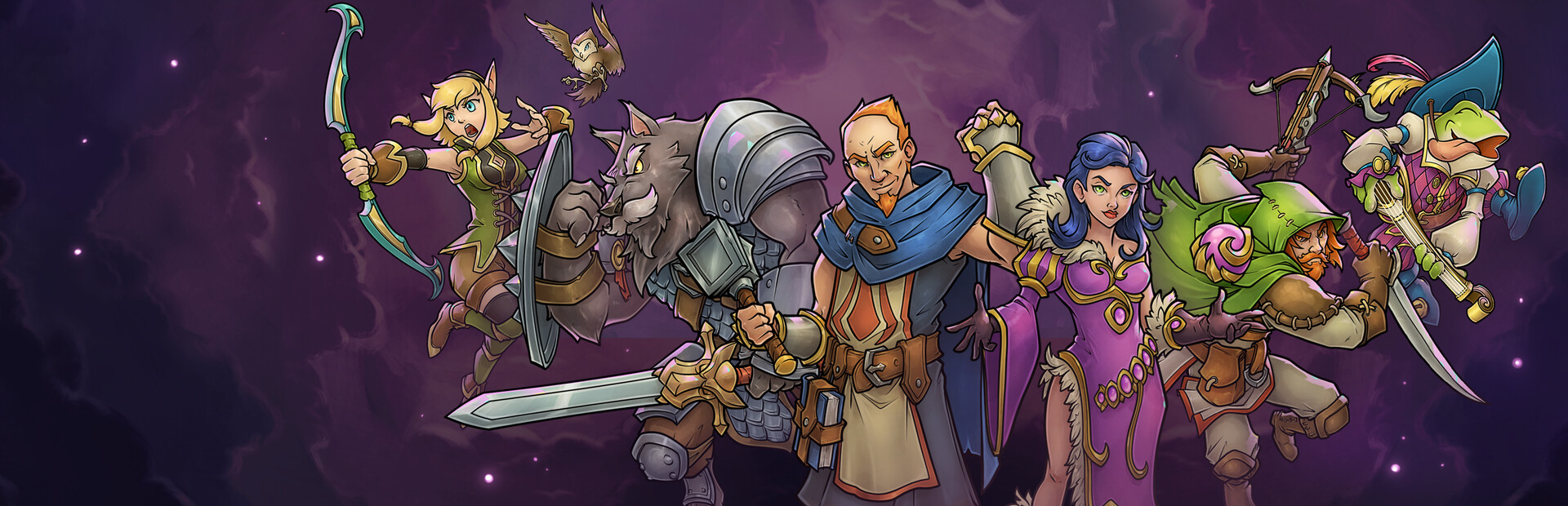
Star Renegades is a dimension spanning rogue-lite strategy RPG. Outsmart uniquely generated adversaries, forge bonds between heroes and end the cycle!
Our score
Eligible for ranking after all five dimensions are reviewed
Game filed. Review coming soon.
This game has not yet completed our five-dimension review. Explore its details and external material in the meantime.
Video reviews
Reviews and deep dives from YouTube and Bilibili, in every language. Open the original video to watch.
Other voices, for reference.
Archived third-party reviews and community material may refer to different versions. External opinions and ratings are presented separately; consult the original videos for their full context.
Community discussion
A pixel-art sci-fi turn-based tactical JRPG roguelite by Massive Damage (published by Raw Fury) where you chain attacks on a timeline, break enemy turns, and fight an invading empire across dimensions over multi-hour runs.
Star Renegades is received as a flawed but distinctive and deeply tactical roguelite. Critics landed at a Metascore of 77 on PC (40 reviews on Metacritic), with many 85-90 scores praising the art, combat and variety, and a few lukewarm ones (Edge 50) citing overwhelming systems and difficulty. Steam players are more positive than Metacritic users: 82.6% positive across about 3,083 reviews (Very Positive), while Metacritic users sit at a mixed 6.6. Long-time players say it has been effectively left as-is by the developer (bugs and balance issues remain), and it is frequently discounted to under $5-10. Players who bond with the timeline system sink hundreds of hours in, while many others bounce off the run length, RNG and writing.
What players praise
- Timeline-based turn combat: chain attacks, delay enemies, and 'break' them so they forfeit their turn and take crits; reviewers call it innovative and puzzle-like, often comparing the feel to Into the Breach
- Very strong pixel art with modern lighting and effects, plus an energetic synth soundtrack, highlighted by critics (Digital Chumps, GamingTrend) and players alike
- Deep build variety via classes, weapons, perks and skills, with lots of synergies to discover
- Nemesis-style system where escaped or victorious mini-bosses return stronger with new modifiers, giving runs memorable loops
- Camp and affinity system between party members produces cutscenes and unlocks alternate appearances and movesets; progeny system unlocks new characters
- Escalating difficulty ladder (Harsh up to Entropy levels) and new-game-plus style restarts where unlocks carry over give strong replay depth for dedicated players
- Great value on sale; several players report 200-700+ hours played
- Runs on Steam Deck and is praised as a handheld game despite minor lag when fast-forwarding
What players criticize
- Runs are very long (commonly 2-4 hours, some report 6+), so a death late in a run feels punishing
- Heavy RNG layering (rewards, enemy backline placement, nemesis modifiers) can invalidate a build through no fault of the player
- Timeline predictions are sometimes inaccurate or ignore certain moves, which can cause run-ending surprises; mechanics are poorly explained in tooltips
- Writing and tone are a frequent complaint: irreverent, cliched, fourth-wall-breaking dialogue that clashes with the world; thin story with no Hades-style narrative progression across runs
- Bugs: soft locks when returning from the map view, chests or looting ceasing to work, stuck end-of-run states, and autosaves capturing broken states; heavy CPU use reported
- Weak tutorial and steep learning curve; players often need outside guides to understand time manipulation and statuses
- Meta-progression is slow or uninspiring and many players unlock the important items within a few runs, while higher difficulties effectively force a narrow set of builds
- Too few regions, so repeated runs feel samey; map navigation is point-and-click and slow, especially during night backtracking
- Full price ($24.99) is widely called hard to justify: several top reviews say it feels unfinished, like early access, and recommend buying only on sale
Distinctive features
- Timeline combat where pushing enemies off the timeline breaks them and forces crits, mixing tactical-RPG puzzle logic with roguelite runs
- Nemesis-system-inspired boss and mini-boss memory across attempts, with special dialogue on revisits
- Dimension-hopping sci-fi JRPG setting (Star Wars meets cyberpunk flavour) with mech and pixel-art aesthetics
- Progeny and relationship system that generates variant heroes and unlocks characters through affinity rather than simple currency
- Alternating male or female sibling protagonist between campaigns, and a true-ending chain that restarts you at higher difficulty with all systems scaling
Divided opinions
- Roguelite structure: some love the long, high-stakes runs and depth while others say the game would be better as a standard JRPG
- Story and humour: seen as charming and funny by some, unbearably cliched or off-tone by others
- Difficulty and RNG: 'perfect information' and cerebral puzzle-solving to fans vs unfair and luck-driven to detractors
- Value: a steal at under $5-10 on sale, but many feel it is unfinished at the $25 full price
Repetition and friction
- Multi-hour runs that must be restarted from scratch after failure; several reviewers say it would be better as a linear JRPG with saves
- Night-time backtracking and clicking through empty map segments
- Grindy, repetitive structure: similar fights and few regions across runs, with small incremental upgrades between runs
- Learning phase of reading about elements and statuses, and dying to unexplained mechanics
- Cringe character banter, and a perceived janky UX and controls that several reviewers say bury a good core game
Hoped-for improvements
- Shorter or more modular runs, or mid-run save points and healing options, to reduce the cost of dying
- Reroll or refresh systems for rewards to mitigate bad RNG
- More accurate and complete timeline predictions and better in-game explanation of mechanics and statuses
- More regions, bosses and content variety so later runs differ more, plus richer meta-progression
- Rebalance difficulty tiers and weak synergies or combo skills so more than a handful of builds remain viable at high difficulty
- Bug fixes and stability work (soft locks, looting, performance); players also ask for a sequel that addresses the feedback
Launched on PC on Sep 8, 2020 (Switch and Xbox One Nov 19, 2020; PS4 delayed to Mar 10, 2021 over technical problems), then added DLC and expansions (Star Renegades: Total Lunarcy, Prime Dimension, Enter the Dragoon on Steam). Critic reception was generally favourable at launch; Switch performance was the weakest (Metacritic 67). Steam sentiment has held at Very Positive for years, and recent reviews call the game slept-on but note the developer appears to have moved on, leaving bugs and balance problems unaddressed. Steam owner estimate is 200k-500k with an estimated gross revenue of about $2.3M (third-party estimate, not audited). Windows only on Steam (no Mac or Linux), Steam Deck reportedly works. OpenCritic could not be retrieved, so no score is given. Note: web search budget was exhausted, so community detail comes from Steam reviews, Steam discussion titles and Metacritic pages rather than Reddit (Reddit fetch was blocked).
Community sources
- Top helpful positive and negative English Steam reviews (local file) ↗
- Steam app metadata: 82.6% positive, ~3,083 reviews, owner and revenue estimates, tags ↗
- Steam store page for Star Renegades (price, tags, review summary) ↗
- Metascore 77 from 39 critic reviews, user score 6.6 ↗
- Critic outlets and scores (DualShockers, GamingTrend, Digital Fix 90; RPG Fan 87) ↗
- Metacritic user reviews: praise for art and combat, complaints about luck, grinding, run length ↗
- Release dates, platform Metacritic scores, critical reception summary ↗
- Steam community discussion titles: bugs, post-game content, story tone, sequel requests ↗
- Third-party Boxleiter-method revenue estimate (about $2.29M gross) ↗
Archived creator commentary 1
Third-party summaries based on automatic captions may contain transcription or interpretation errors.
Tier list Part 4 (2025)
Star Renegades is a turn-based strategy RPG roguelike with a party of up to five characters, a timeline bar for turn order, and heavy Darkest Dungeon inspiration. He finds the core combat satisfying and strategic, with great art and animation, but is deeply frustrated by a messy UI and unclear information. After about 10 hours he is still confused by mechanics, and runs can drag. He places it mid B, says a UI overhaul would make it much better, and plans to return to it.
What the creator praises
- Core tactical combat is satisfying, enjoyable and fairly strategic
- Timeline/time-bar mechanic, where you manipulate enemy turn order and crits, is unique and strategic
- Art style and animations are excellent, with unique animations per enemy and attack
- Characters play drastically differently and there are many party combinations
- Solid story with attention to characters and camp relationship systems
- Items add roguelike variety so runs feel different
Issues raised by the creator
- UI is a mess: no quick inventory, information is unclear, and enemy intentions are hard to see
- Basic quality-of-life gaps, e.g. needing to press a button then click to inspect an enemy instead of hovering
- Overwhelming and confusing to start; unclear why some attacks are automatic and turn order can trigger accidentally
- Runs can be very long, with fights taking many turns of repeating the same few abilities
- Starting a new run feels like a drag; characters have no roguelike progression and level identically
Design observations
- The timeline bar, where positioning before enemies and pushing them back enables crits, is its most unique part
- Turn-based RPG roguelikes are rare despite the genre's roots, making this a notable entry
- Gameplay is more complicated than Darkest Dungeon, which he is unsure is good or bad