 Game file / ROGUE BY ROGUE
Sundered
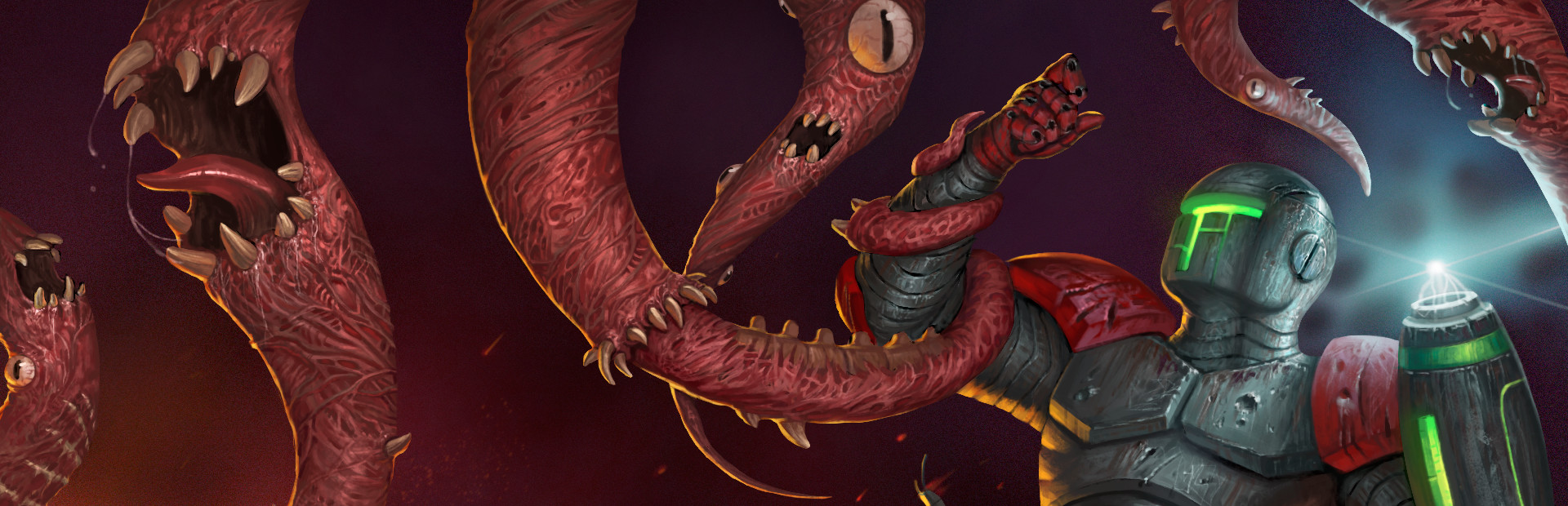
Sundered is a chaotic hand-drawn metroidvania where you resist or embrace ancient eldritch powers, a challenging and unique take on a classic genre from the creators of Jotun, now with local co-op!
Our score
Eligible for ranking after all five dimensions are reviewed
Game filed. Review coming soon.
This game has not yet completed our five-dimension review. Explore its details and external material in the meantime.
Video reviews
Reviews and deep dives from YouTube and Bilibili, in every language. Open the original video to watch.
Other voices, for reference.
Archived third-party reviews and community material may refer to different versions. External opinions and ratings are presented separately; consult the original videos for their full context.
Community discussion
A hand-drawn Lovecraftian Metroidvania from Thunder Lotus (Jotun) with procedurally assembled maps, endless enemy horde rooms, and a corruption-based power system.
Sundered is well liked overall: Steam shows Very Positive (about 82%, roughly 5,200 reviews), and Metacritic sits at a Mixed-or-Average 74 from 39 critics, with user score 7.1. Nearly everyone praises the hand-drawn art, animation, atmosphere, boss designs and the fluid movement and abilities. The split is over the core design: the endless horde spawns, semi-procedural maps and stat-driven progression delight some players and feel repetitive and tedious to others. It is a finished 2017 release (Eldritch Edition added the free Magnate of the Gong update with new areas and local co-op); it is not early access. Some recent Steam reviewers mention a dip in recent ratings, and the top positive reviews push back on it.
What players praise
- Gorgeous hand-drawn art and fluid animation, the most universally praised element (Thunder Lotus signature, compared with Jotun and Spiritfarer)
- Large, memorable boss fights that reward learning patterns
- Movement and traversal feel great, and new abilities (especially corrupted versions via eldritch shards) make you feel powerful
- Atmospheric Lovecraftian world, soundtrack and sparse, evocative lore with a narrator voice and multiple endings
- Sprawling central skill tree and build variety give a real sense of progression after each death
- Procedural layout keeps exploration fresh and makes a blend of Metroidvania and roguelite that some call the most meaningful one they have played
- Non-linear exploration and currency collection, plus difficulty options and easy 100% achievements for completionists
What players criticize
- Endless horde rooms and waves of weak, repeated enemy types (palette swaps) feel overwhelming, spammy and screen-covering
- Combat is described as button mashing or dodging, with little depth outside bosses
- Long stretches of empty or samey rooms; the map is not very helpful and the start is confusing with little explanation
- Some boss fights are considered poorly designed (either trivial with the right build or slow and tanky)
- Local co-op is widely called a letdown: the second player cannot die, collect items or meaningfully interact
- Keyboard play suffers, notably the grappling hook section (works far better on a gamepad)
- Story is told obliquely and is easy to miss or forget; it is also short (roughly 10 to 20 hours)
Distinctive features
- Resist or Embrace system: corrupt abilities with eldritch shards for power at the cost of humanity, leading to different endings
- Procedurally assembled Metroidvania map with handcrafted elements rather than a fixed hand-built world
- Horde-based combat where huge numbers of enemies spawn continuously in some rooms
- Roguelite-style permanent upgrades via a central skill tree that let you come back stronger after death
- Lovecraftian setting in an abandoned underground military base with huge boss sprites
Divided opinions
- Procedural generation: some love the replayability, others say it undercuts what makes a Metroidvania (authored level design)
- Horde mechanic: seen as fitting chaotic eldritch atmosphere by fans and as an annoying pacing killer by detractors
- Difficulty and feel of combat: empowering and smooth once upgraded vs. shallow and sloppy
- Value and length: worth it at the price for many, bare-bones and only decent on sale for others
Repetition and friction
- Endless enemy respawns that force you to stop and fight while chipping away at your health, then chase you back through rooms
- Grinding perks and shards; guides reportedly recommend AFK or boss farming for money, which players read as a flawed progression loop
- Three endings requiring separate playthroughs, repeating the same path and looting
- Running through many empty rooms to get from A to B
- Overly complex skill tree with few exciting unlocks for some players
- Early game frustration before upgrades arrive
Hoped-for improvements
- Clearer onboarding and tutorials, including explaining shard destruction and corruption mechanics
- More enemy variety and less reliance on palette-swapped stronger variants
- Better map and navigation clarity in a procedurally assembled world
- A meaningful co-op design where player two has health and can interact with the world
- More flexible save slots, since players say the three slots limit getting all endings without replaying
- Clearer storytelling and more content or length
Launched July 2017 to generally strong reviews from outlets such as GameSpot (8), Eurogamer and Rock, Paper, Shotgun per the Steam page, while the Metacritic aggregate is a more modest 74 because of mid-range scores tied to repetition. The Eldritch Edition added the free Magnate of the Gong update (new areas, quest chains, a boss, local co-op). Platforms: Windows, Mac and Linux on Steam; Steam Deck and controller support noted in reviews (keyboard play is weaker). Estimated 200k to 500k Steam owners and about $2.9M gross revenue (third-party Boxleiter-style estimate, not audited). Several long-time players say recent Steam ratings have dipped to Mixed and call it undeserved; negatives cite the horde design and co-op.
Community sources
- Top helpful positive and negative English Steam reviews (local file) ↗
- Steam app data: review counts, tags, SteamSpy owner range, revenue estimate ↗
- Steam store page: review summary, features, Eldritch Edition and Magnate of the Gong update ↗
- Metascore 74 from 39 critics, user score 7.1 ↗
- Critic review scores and summaries (AotF 100, DualShockers 95, USgamer 80, AusGamers 81) ↗
- User review breakdown and common praise and complaints ↗
- Third-party revenue estimate (about $2.85M gross) ↗
- Developer product page (listed in Steam data) ↗
Archived creator commentary 1
Third-party summaries based on automatic captions may contain transcription or interpretation errors.
Tier list Part 1 (2023)
Sundered is a Metroidvania with roguelike elements bolted on. He thinks the visuals, world and story make a great Metroidvania, but the roguelike layer feels like a last-second addition that hurts it. Build randomization is stripped out, leaving only randomized map portions and enemies. He would recommend it to some people for the visuals, but says it would be much better if it were not a roguelike. He places it in low B.
What the creator praises
- Visuals and art direction look amazing
- Strong world and story as a Metroidvania
- Unique genre mix of Metroidvania and roguelike
- He enjoyed playing and streaming it for the look
Issues raised by the creator
- Roguelike elements feel tacked on and make no sense for the game
- No random build aspect, only randomized map pieces and enemies
- Randomized platforming within maps is clunky and frustrating
- Enemies pop up randomly in levels not designed for them
- Randomness hurts what would otherwise be a great game
Design observations
- Metroidvania-roguelike hybrid where the world is fixed but rooms' platforming and enemy spawns are randomized
- Design lesson: randomization must fit level design, or it undermines it