Like Brotato but want more shooting? Try 20 Minutes Till Dawn
If Brotato’s appeal is surviving crowds while upgrades grow into a build, 20 Minutes Till Dawn is a relevant next step. It particularly suits players who want directional aiming and active firing to matter more. If shopping between short waves is your favorite part, the match is less direct. This recommendation covers the Steam PC base games, not mobile editions or expansions.
Aiming is only one part of the change
The official description of 20 Minutes Till Dawn emphasizes directional aim and active firing. GIGAZINE’s Steam review also documents reloads and an automatic-aim option. So the distinction is not that manual aiming is compulsory: it is whether you enjoy watching a weapon’s firing cycle while choosing a safe direction to move.
For example, if enemies close in while your weapon needs a reload, an upgrade that helps keep a route open may serve you better than another attractive damage effect. This is an editorial way to evaluate a build, not a mandatory recipe. Read what your actual weapon and upgrades do before choosing between gun effects, summons and other abilities.
Expect a different rhythm of progress
Brotato gives its shopping decisions a regular place between enemy waves and lets you combine up to six weapons. In 20 Minutes Till Dawn, the main survival premise is a twenty-minute countdown, with experience collection leading to upgrade choices. You keep adapting a starting character and weapon instead of returning to Brotato’s shop loop.
The Steam description also confirms persistent Rune progression and unlockable characters and weapons. If you like improving future attempts, that adds a reason to return. If you want each new run to depend only on its immediate decisions, consider whether that permanent development is a benefit for you.
Choose by what you enjoy
| Game | Choose it for | Consider before choosing |
|---|---|---|
| 20 Minutes Till Dawn | You want familiar horde survival with more attention on firing and reloads. | It does not reproduce Brotato’s wave shops or its local co-op. |
20 Minutes Till Dawn
You want familiar horde survival with more attention on firing and reloads.
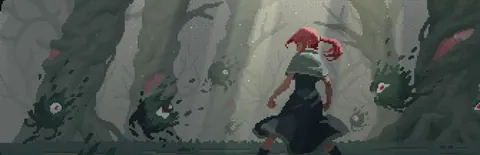
Choose 20 Minutes Till Dawn when you want a build to change how a weapon and its supporting effects handle a crowd. Experience upgrades, summons, weapon evolution and Runes provide several things to think about. You need not regard it as a replacement for Brotato: it answers a different desire within the same broad survival format.
Watch an early stretch before the screen fills with upgraded effects. Check whether moving, aiming, firing and reloading looks engaging in its simplest form, and whether enemies remain readable against the dark presentation. A spectacular late build says less about the opening minutes you will repeat.
Switch for the shooting, keep expectations about the shop separate
Put 20 Minutes Till Dawn on your shortlist if you want to turn crowd survival into more deliberate shooting decisions. Stay closer to Brotato if scheduled shopping breaks and multiple simultaneous weapons are the main attraction. If aim control is the only missing feature, try Brotato’s manual-aim setting first.
Frequently asked questions
Does Brotato lack manual aiming?
No. Its official Steam description lists automatic firing by default with an option for manual aiming. That feature alone is not a reason to switch games.
Must I aim manually in 20 Minutes Till Dawn?
No. GIGAZINE’s Steam review documents an automatic-aim option as well as manual aiming. The official description still foregrounds active firing and directional control; this recommendation does not promise identical control options on mobile.
Can it replace Brotato for local co-op?
No. The Steam listing for 20 Minutes Till Dawn is single-player. Brotato’s listing supports local co-op for up to four players. Choose around that difference if playing together is essential.
Sources and scope
Based on the sources below, checked on the dates shown; recommendations about fit are editorial judgments, not a hands-on play report or a difficulty measurement. This guide covers the named games, not their sequels. See each game page for review evidence.