Grid-based dungeon roguelikes: Crown Trick or Crypt of the NecroDancer?
Want to explore a dungeon one square at a time? Start by deciding who sets the pace. Crown Trick lets you consider a move before enemies respond; Crypt of the NecroDancer asks you to read the room while keeping time. Both make position matter, but they ask for different kinds of attention. These recommendations cover their core PC single-player loops, based on documented mechanics rather than a universal difficulty ranking.
First ask what advances the room
A grid describes space, not how long you have to think. In Crown Trick, enemies wait while you choose your next action. In NecroDancer’s standard beat-driven play, the music keeps the encounter moving. Do not assume that a game with squares will wait for you.
This distinction matters more than whether you like pixel art or fantasy weapons. Choose deliberate play if comparing possible moves is the attraction. Choose rhythm if turning a learned pattern into timely movement sounds satisfying. Neither preference says how good you are at strategy.
Watch one move, not just a successful run
During ordinary footage, pick a moment when an enemy is nearby. Predict where the player and that enemy will be after the next action. Then watch what happened. For Crown Trick, ask whether studying that choice feels interesting; for NecroDancer, keep the clip running and try following the same decision at its actual pace.
A useful follow-up is to identify why a hit occurred. Was the chosen square unsafe, was the attack’s reach misunderstood, or did the timing slip? These are viewing prompts, not a claim that every encounter has a safe answer. A victory montage rarely shows which kind of learning you would enjoy.
Choose by what you enjoy
| Game | Choose it for | Consider before choosing |
|---|---|---|
| Crown Trick | For planning positions and elemental interactions | Time to think does not remove the consequences of a bad move |
| Crypt of the Necrodancer | For learning enemy patterns and acting to a beat | Keeping time is only half the task; your destination must also make sense |
Crown Trick
For planning positions and elemental interactions

Crown Trick uses synchronous turns in changing dungeon rooms. Its official description emphasizes combining terrain and skills, and gaining abilities from defeated Familiars. Position is therefore part of your equipment’s usefulness: a promising ability still needs a situation where it can do its job.
Consider it if you enjoy checking a room before committing. A simple viewing exercise is to compare moving closer with staying out of reach and preparing another action. The trade-off is that studying weapons, effects and nearby threats remains work, even when fast inputs are unnecessary.
Crypt of the Necrodancer
For learning enemy patterns and acting to a beat
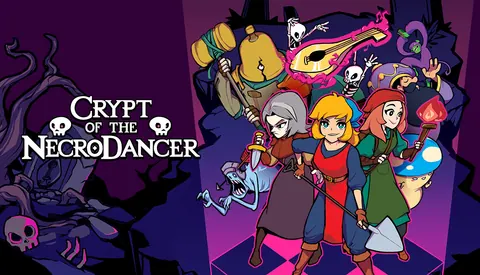
Crypt of the NecroDancer ties dungeon movement and combat to music. In its standard rhythm rules, enemies do not wait simply because you missed an input. You need to recognize movement patterns while choosing a useful square, so accurate tapping alone does not solve the room.
Consider it if practicing a pattern until movement becomes fluent sounds rewarding. The PC store lists keyboard and controller support as well as USB dance pads, so a dance pad is optional. Our comparison concerns the standard beat-driven experience; characters and modes can change the rules.
Choose the pace you want to practice
Start with Crown Trick for unhurried decisions, or NecroDancer for decisions made in rhythm. Both suit players interested in where their character stands. If you mainly want free movement and reflex dodges, watch a full ordinary encounter before buying either.
Frequently asked questions
Is Crown Trick a rhythm game?
No. Its synchronous turns let you decide when to act. The comparison is about grid-based dungeon movement, not a shared music mechanic.
Does NecroDancer require rhythm-game experience?
Experience may help with timing, but you still need to learn enemy movement and weapon reach. Judge whether that combined practice appeals to you; familiarity with music games is not a guarantee of easy progress.
Sources and scope
Based on the sources below, checked on the dates shown; recommendations about fit are editorial judgments, not a hands-on play report or a difficulty measurement. This guide covers the named games, not their sequels. See each game page for review evidence.