Into the Breach Beginner Guide: Plan Your First Turns
Before firing your first weapon in Into the Breach, ask what will be damaged if you do nothing. The enemy attack previews give you the starting point for a plan. This guide helps you turn that information into a sequence of decisions: identify the loss you must prevent, find an action that changes it, then check what remains. It is a practice routine for early battles, not a squad tier list or a promise that every board has a perfect solution.
Read the outcome before choosing a target
Subset Games describes civilian buildings as the power source for your mechs and confirms that enemy attacks are telegraphed. Begin by reading the mission objective and following each attack marker to its destination. Separate threats to buildings, mission targets and your own units; the most convenient enemy to hit may not be the most urgent problem.
Our suggested exercise is to describe the untouched board in one sentence: which attacks matter, and what would they cost? Then choose the loss you most need to prevent. This keeps you from spending your strongest action on an enemy whose attack was already harmless.
Judge a push by the board it leaves behind
A weapon with displacement can change a threat without killing its source. Look at the effect preview, the destination tile and the new line of attack together. Pushing an enemy away from one building is only useful if the resulting position does not put another important target in danger.
Consider a hypothetical case: an enemy threatens a building, your attack cannot kill it, and a sideways push would make its displayed attack miss every vulnerable target. If the destination is safe and the preview confirms that result, the push solves this turn's problem. If the push causes a collision with a building instead, the same idea fails. The lesson is to evaluate the result, not to treat pushing as automatically safe.
Check the whole sequence before committing
Start by finding the mech with the fewest useful options. If only one unit can reach a threatened area, reserve its action while considering the others. Then check whether the proposed moves block a firing line, occupy a needed tile or push a target out of another weapon's reach. This is our planning method, not a fixed move order for every squad.
If your plan relies on one enemy hitting another, inspect the attack order as well as their positions. A threat removed after its attack has already happened does not save the original target. Before ending the turn, reread the remaining previews instead of assuming the board still matches your initial plan.
When you cannot save everything, compare concrete losses
The Power Grid is the run's failure condition, but that does not make every sacrifice of a mech sensible. Compare the remaining grid, the threatened objective and the unit you still need to act. Our beginner advice is to name the cost of each option before choosing; a general slogan such as ‘always take the hit’ hides the circumstances that make it good or bad.
Between battles, use the same habit with upgrades. Did you fail because you could not reach a useful tile, could not change an attack's direction, or could not remove a target? Look for a tool that addresses the observed gap. More damage is valuable when damage was the actual bottleneck; it is not an automatic cure for a positioning problem.
Choose by what you enjoy
| Game | Choose it for | Consider before choosing |
|---|---|---|
| Into the Breach | You want to learn a repeatable way to read tactical threats | Clear previews still require trade-offs and careful interpretation |
Into the Breach
You want to learn a repeatable way to read tactical threats
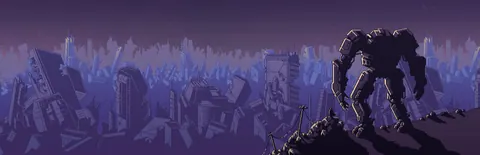
For a first practice run, keep the squad familiar and judge progress by the quality of your explanations. After a battle, identify one action that protected something and one that created a new problem. This gives the next attempt a useful goal even if the run ended early.
The free Advanced Edition update adds squads, weapons, enemies and other content. Its official announcement says the additional content can be switched off, while balance changes remain. Reducing those optional additions can help limit the rules you learn at once; it does not recreate every detail of the old version. This article covers core board reading, not Unfair difficulty optimization or every weapon interaction.
Give the next battle a small learning goal
Before acting, identify the important threatened targets. Before firing, check the resulting positions and any dependent actions. Before ending the turn, review the surviving attacks. Use this short routine until you can explain why an action helps, then start exploring more elaborate combinations.
After a loss, distinguish a missed preview from a deliberate trade-off. The first suggests a reading habit to improve; the second suggests comparing alternatives or earlier positioning. You do not need to prove that every defeat was avoidable to learn something useful from it.
Frequently asked questions
Should I kill every enemy as quickly as possible?
Judge the mission and the threatened targets first. Removing an enemy can help future turns, but a nonlethal action may be enough to prevent the immediate loss. Do not spend all your useful actions chasing a kill while leaving an important attack unresolved.
Does a push into water or a hazard always work?
No universal rule covers every unit and terrain interaction. Read the unit's traits, the tile and the weapon preview. This guide deliberately uses a conditional example instead of assuming that every displaced enemy dies or every attack is cancelled.
Does seeing all attacks guarantee a no-damage solution?
No. Knowing what is about to happen is different from having enough actions and suitable positions to stop it. The developers explicitly discuss unavoidable damage in their Unfair-mode guidance. This beginner routine helps compare choices; it does not guarantee perfect boards at any difficulty.
Sources and scope
Based on the sources below, checked on the dates shown; recommendations about fit are editorial judgments, not a hands-on play report or a difficulty measurement. This guide covers the named games, not their sequels. See each game page for review evidence.