Slay the Spire vs Monster Train: Which Deckbuilder Fits You?
Choose Slay the Spire if you want to keep adjusting a deck around the next problem. Choose Monster Train if building a formation across several floors sounds as appealing as playing the cards themselves. Both reward adapting to what a run offers; the useful distinction is where you want to spend your attention. This comparison covers the original games' core single-player play, not their sequels or a ranking of every deckbuilder.
Start with the decision you want to repeat
Slay the Spire connects card choices, relics and a changing route. Its appeal, in our view, is repeatedly revising a plan: a promising reward still needs to help the deck you actually have. If you enjoy asking what your current tools can handle before taking another risk, this is a strong starting point.
Monster Train adds three vertical battlefields and a primary/supporting clan pairing. Cards help create and support a defensive formation, so a choice also has a spatial consequence. We recommend it when the thought of deciding where a unit belongs makes a card game more interesting to you, rather than adding an unwanted layer to track.
Both need adaptation; the planning tools differ
The official Slay the Spire description emphasizes finding cards that work together and choosing between risky and safer paths. A useful buying question is whether you enjoy changing direction when a reward does not fit your original idea. Do not approach it expecting to select a finished deck before every climb.
Monster Train explicitly offers card upgrades and duplication at route locations. That makes developing a particular tool an appealing part of its loop. Our advice is to watch an upgrade choice in a gameplay video: does improving one unit or spell and then arranging support for it look satisfying? The extra planning options still do not guarantee the cards or upgrades you want.
Choose by what you enjoy
| Game | Choose it for | Consider before choosing |
|---|---|---|
| Slay the Spire | You enjoy revising a deck and weighing route risks | A strong-looking card can still be the wrong addition |
| Monster Train | You want card combinations plus unit placement and upgrades | A convincing combo still needs a workable defensive layout |
Slay the Spire
You enjoy revising a deck and weighing route risks
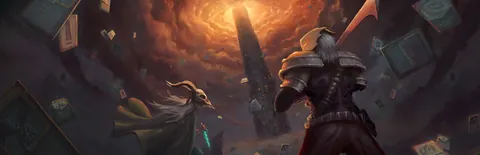
Our recommendation favors Slay the Spire when you want the deck itself to be the main object of attention. Cards and relics form the core of the official pitch; you can focus on how one choice changes what the rest of your tools can accomplish.
For a first run, give each new card a job. Does it help with a problem you are already facing, or does it depend on several rewards you have not found? This is a learning exercise, not a rule to reject every speculative pick. It makes a loss easier to examine than simply deciding that the deck needed more rare cards.
The limitation is that a plan can fail gradually. If you dislike discovering later that earlier choices left a gap, this kind of adaptation may feel tiring. We would choose it for the pleasure of diagnosing those gaps, not on a promise that it is the easier game.
Monster Train
You want card combinations plus unit placement and upgrades
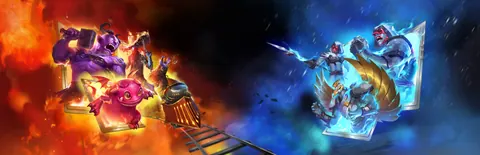
Our recommendation favors Monster Train when you like building a team as well as a deck. The official store page confirms the clan pairing, multiple floors and upgrade opportunities. Together, those systems give you several ways to develop an idea rather than judging a card only in isolation.
When looking at a run, ask two separate questions: what is the combination supposed to achieve, and how will the deployed units make it happen? This distinction is useful if you already know Slay the Spire. Familiar card-game vocabulary should not tempt you to ignore placement while concentrating on the hand.
The trade-off is more simultaneous context. If you want to assess cards without also following a formation, the train can feel busy. The Last Divinity is separate DLC; the recommendation here rests on the base loop and does not assume its additional systems.
Use one ordinary battle to decide
Watch a normal battle and the next reward choice for each game, rather than only a spectacular final combo. For Slay the Spire, notice whether you want to debate the next card and path. For Monster Train, notice whether you want to rearrange the formation and plan its upgrades. That curiosity is a better tie-breaker than the size of the damage numbers.
If you already enjoy one, the other is worth considering for a different emphasis, not as an automatic replacement. Check the actual edition, language and controls on your target store before buying; this comparison does not rely on a temporary discount, a fixed run length or sequel features.
Frequently asked questions
Which is easier for a deckbuilding beginner?
We would decide by the information you enjoy handling. Slay the Spire foregrounds the deck and route; Monster Train adds a formation across floors. Neither description establishes a universal difficulty ranking, and familiar card rules do not remove the need to learn each game's encounters.
Do I need The Last Divinity to follow this recommendation?
No. The comparison uses Monster Train's base-game clan pairing, floors and card development. Guides written around The Last Divinity can assume extra mechanics, so check their stated scope before treating them as beginner instructions.
Is this a comparison of Slay the Spire 2 and Monster Train 2?
No. It compares the original Slay the Spire and the original Monster Train. The linked official stores and game details identify those titles; sequel systems are outside this article's scope.
Sources and scope
Based on the sources below, checked on the dates shown; recommendations about fit are editorial judgments, not a hands-on play report or a difficulty measurement. This guide covers the named games, not their sequels. See each game page for review evidence.