Spelunky 2 vs Rogue Legacy 2: traps or a growing family legacy?
Choose Spelunky 2 if you want to learn how a dangerous environment works and carry that understanding into another attempt. Choose Rogue Legacy 2 if you also want each generation to contribute to a stronger family estate. Both combine platforming with changing layouts, but offer different reasons to start again. This comparison covers their core single-player PC experience.
What are you reading on the screen?
In Spelunky 2, traps, creatures, objects and liquids can interact. A jump is a decision about the landing place and what might reach it. Branching routes and background layers add places to investigate. The appeal is learning relationships inside a changing space, not simply clearing every enemy from a room.
Rogue Legacy 2 puts more emphasis on fighting with a chosen class while exploring a changing kingdom. Classes have distinct weapons and abilities; switching heirs can change the range and rhythm you need to manage. If you like practicing an attack, dodging the response and improving that exchange, its combat is the more direct starting point.
What survives a failed attempt?
Rogue Legacy 2 explicitly builds around inheritance and permanent manor upgrades. Heirlooms also grant lasting abilities that open further exploration. There are temporary gains too: relics collected during a run disappear when the heir dies. The useful distinction is between developing the family and assembling the current adventurer, rather than assuming every discovery stays forever.
Spelunky 2 has a developing base camp, unlockable characters and shortcuts, so calling it a game with absolutely no persistent progress would be misleading. Those features do not provide the same manor-building loop. Choose it for the satisfaction of recognizing a danger sooner or abandoning an unnecessary detour, rather than expecting repeated failures to purchase a stronger starting character.
A practical test before buying
Watch an ordinary early section of each game. For Spelunky 2, pause the recording before a descent and point out a landing spot, a nearby threat and another route. For Rogue Legacy 2, identify the class's attack distance and when the player can safely strike again. These are viewing exercises, not claims that every room has a safe solution.
Then watch a return to the hub. Does choosing an heir and spending inheritance make you want another run, or would you rather return directly to testing your understanding of the cave? If repeated resource collection feels like a chore, permanent progression may not be the advantage it first appears. Conversely, restarting mainly to learn may feel unrewarding if visible growth is essential to you.
Choose by what you enjoy
| Game | Choose it for | Consider before choosing |
|---|---|---|
| Spelunky 2 | For players who enjoy route judgment and interacting hazards | A small error can have consequences beyond the obstacle in front of you |
| Rogue Legacy 2 | For players who want class variety and lasting family development | Permanent upgrades still leave attacks and platforming to execute |
Spelunky 2
For players who enjoy route judgment and interacting hazards
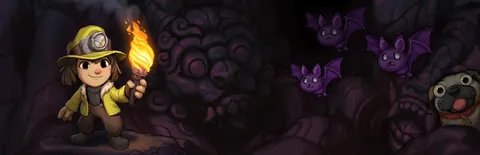
Spelunky 2 is the stronger fit when your first question is what the room might do next. Its environment supplies changing situations to read, while discoveries give you reasons to investigate further. You still need precise real-time movement; enjoying puzzles alone does not guarantee that you will enjoy executing the solution.
Look at unedited early exploration as well as successful highlights. If tracing a failed chain of events sounds interesting, the learning loop may suit you. If you mainly want a class build and a lasting upgrade purchase after each outing, start with Rogue Legacy 2 instead.
Rogue Legacy 2
For players who want class variety and lasting family development

Rogue Legacy 2 makes a useful choice when you want to alternate between trying a fighting style and deciding how to develop your estate. Its heirlooms add lasting traversal abilities, but the changing kingdom is not a single fixed map to memorize like a conventional exploration platformer.
House Rules offer adjustments including damage, health, contact damage and flight for platforming. That gives you specific ways to tailor the challenge. It is a reason to investigate the settings if execution is a concern, not a promise that every default encounter will be easy.
Choose the kind of progress you want
For learning a hazardous world through observation and movement, prioritize Spelunky 2. For that action practice alongside class changes and permanent family investment, prioritize Rogue Legacy 2. These are editorial judgments based on the documented systems, not rankings of difficulty or guarantees about completion time. Prices, console performance and multiplayer setup are outside this comparison.
Frequently asked questions
Does Spelunky 2 really reset everything?
No. Its official description includes an expanding base camp, character unlocks and shortcuts. The comparison concerns how you improve between attempts: those persistent features should not be confused with Rogue Legacy 2's permanent manor upgrades.
Which should I investigate if platforming is the main obstacle?
Rogue Legacy 2 has explicit House Rules, including flight for difficult platforming sections. Read those options before buying. They offer a way to adapt the experience, while neither game's default mode is a guarantee of comfortable difficulty for every player.
Sources and scope
Based on the sources below, checked on the dates shown; recommendations about fit are editorial judgments, not a hands-on play report or a difficulty measurement. This guide covers the named games, not their sequels. See each game page for review evidence.