 Game file / ROGUE BY ROGUE
Breachway
Explore the galaxy in this deckbuilding, sci-fi roguelike where ship upgrades and crew management are key to your survival. Optimize resource generation, engage in intense turn-based battles, and take on ever-growing threats as you seek out The Signal.
Our score
Eligible for ranking after all five dimensions are reviewed
Game filed. Review coming soon.
This game has not yet completed our five-dimension review. Explore its details and external material in the meantime.
Video reviews
Reviews and deep dives from YouTube and Bilibili, in every language. Open the original video to watch.
Other voices, for reference.
Archived third-party reviews and community material may refer to different versions. External opinions and ratings are presented separately; consult the original videos for their full context.
Community discussion
A turn-based sci-fi deckbuilding roguelike from Edgeflow Studio (published by Hooded Horse) in which you fly a modular ship through sectors, managing power, heat, crew and per-weapon card decks in FTL-meets-Slay-the-Spire fights.
Breachway sits at Mostly Positive on Steam (about 76% of roughly 1,500 reviews; recent 30-day sample around 75%). It is still in Early Access two years after its Sep 2024 launch. Players who like it call it a fresh FTL-with-cards hybrid with a distinctive cooldown-based deck system and a developer who patched often. Since roughly mid-2026 the most upvoted negative reviews say progress has stalled: the run still ends after the second sector, the promised next map has not appeared, and some users suspect the game is abandoned. Critics are few and mixed: Metacritic lists only a few critic reviews but has no Metascore yet (it needs four scored reviews), and the reviews I could see carry no numeric scores.
What players praise
- Distinctive take on deckbuilding: each weapon and module acts as its own mini-deck, and played cards must cool down in the discard pile before they can be drawn again, so burning through your deck is a real risk
- Strong FTL plus Slay the Spire feel; several reviewers call it a better spiritual successor to FTL than Into the Breach
- Power allocation, heat management and crew abilities add a layer of decision-making beyond plain card play
- Weapon types feel different from one another (for example pulse lasers and railguns that snipe components, flak against missiles or drones), and loadout variety supports different builds
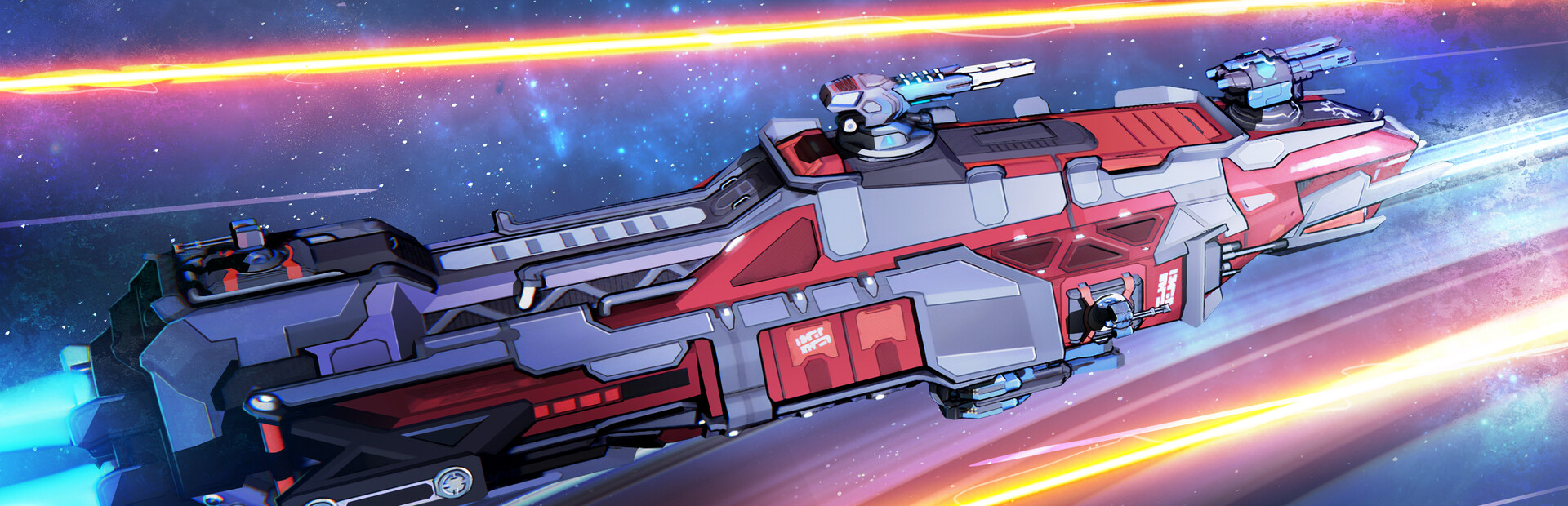
- Sci-fi presentation, Expanse-like tone, ship design and music get frequent praise from positive reviewers (though some negative reviews call the ship designs generic)
- Developer has been responsive and patched frequently during Early Access, and many reviewers say the game improved a lot since launch
- Good value and replayability for $19.99 according to positive reviewers, with ascension-style difficulty levels unlocked by winning
What players criticize
- Progress has stalled: the run still ends after the second sector with no resolution of the story, and the long-promised third map has not shipped, so some players think the game is abandoned
- Stability and performance: crashes after combat or on load, lag spikes and input lag even on high-end hardware (RTX 5070 Ti/5080 and similar), with reports that save progress is lost after a crash
- Many bugs around card interactions, tooltips and heat, and some players cannot tell what is a bug and what is a badly explained mechanic
- Combat becomes repetitive: shoot, shield, shoot, repeat, with long fights against high-health, high-shield enemies
- Shallow content: little enemy variety, repetitive bosses, few ships, four factions that barely differ, and very thin story or motivation
- Balance problems that cut both ways: easy for most of a run, then spikes from the final boss and the second boss (overheat, heavy shielding, hacks); raw damage often beats the hacking, brittle and overheat systems
- UI and clarity problems: tooltips that overlap and block equipping items, hard-to-read health and shields, and a tutorial that does not explain the fuel and yellow-path movement costs
- Weak metaprogression: reviewers say you carry little between runs, and most runs are a slight variation of the starting gear
Distinctive features
- Per-module mini-decks that combine into your hand, with a cooldown in the discard pile, unlike Slay the Spire's shuffle-the-discard loop
- Three resource colors (power types) plus heat and overheating as a core tradeoff
- Node-map navigation where path colors spend different resources, and fuel that is scarce and only found at stations
- Crew and subsystem management with enemy component targeting and hacking, plus faction relations and 4X-flavoured space trade
- Hard sci-fi tone in the style of The Expanse rather than space-fantasy
Divided opinions
- Difficulty: some players find runs and bosses too easy, others find the later bosses and scarce resources punishing
- Whether the roguelite loop is engaging or a slog: a minority call the combat great, while highly upvoted negatives (150 hours, 6 hours, 30 hours) say decisions feel low-impact
- Whether the dev is still committed: earlier reviews praise frequent updates, while 2026 reviews cite two years with no new map
- Deck size strategy: Breachway rewards bigger decks than most deckbuilders, which some see as innovative and others as unintuitive
- Visuals and ship design: positive reviewers praise ship design and the sci-fi look, while a 14-upvote negative review calls the ships generic and the battle visuals pointless
Repetition and friction
- Long, drawn-out early fights where damage per turn is low (roughly 4-8) and enemies carry about 50 HP plus shields
- Fuel scarcity (only 2 starting fuel, refuel only at stations) that limits exploration and pushes grinding sectors
- Hard-to-predict negative node debuffs and enemy hacks with no counter unless a station offers security systems
- Calculating multi-card damage combos with shred, brittle and other modifiers is cumbersome
- Deleting or upgrading cards is expensive, and weapon decks can be full before you get a chance to upgrade
- Reinstalling or restarting after crashes and the general sense of being railroaded toward a loss
Hoped-for improvements
- Ship the promised additional sectors and an ending; one reviewer also suggests an endless or procedural mode
- Fix the crashes, save issues and performance stutter before adding content
- Add more enemy, event, quest and boss variety so the map stops feeling sparse
- Improve tooltips, card descriptions and the tutorial so mechanics such as heat, fuel and movement costs are clear
- Rebalance difficulty and resource scarcity (starting fuel, deck-thinning costs, heat builds, the second and final bosses) and make the hacking, brittle and overheat options competitive with raw damage
- Strengthen metaprogression and add more ships and weapon variety; some players also ask for ship visual customization
Launched into Early Access on Sep 26, 2024 at $19.99 (Windows only) with Hooded Horse as publisher. Early Steam reviews (around patch 31 and after) were warm and stressed rapid patching, a live Discord and a stated roadmap. By 2026 the tone on the most helpful negative reviews had shifted to frustration: crashes and lag persist, the game still ends after sector two, and promised content has not arrived. A reviewer also notes it appeared in a 2026 Tacticon showcase and questions that given the lack of progress. Steam forum counts show a large bug-report backlog (about 536 threads). Third-party estimates (Boxleiter method, not audited) put it at 50,000-100,000 owners and roughly $725k gross and $214k net revenue. Steam revenue calculator lists roughly 1,000 reviews. I could not verify the current development state, patch cadence or official roadmap because the Steam news page returned no content to my fetch.
Community sources
- Top helpful positive and negative English Steam reviews (local file; source of most bullets, including 2026 stalled-development complaints) ↗
- Local Steam metadata: release date, price, review counts, owner and revenue estimates ↗
- Steam store page: Early Access status, review summaries, user tags ↗
- Metacritic page: no Metascore yet (needs 4 scored critic reviews), no user score ↗
- Five critic reviews listed (Gameliner, Try Hard Guides, RPS, GINX TV, GLHF/SI) without numeric scores ↗
- Confirms zero Metacritic user reviews ↗
- Boxleiter-style revenue estimate: about $725k gross, $214k net ↗
- Steam forum: balance debates, equipment upgrade issues, release-plan questions, bug-report volume ↗
- Attempted OpenCritic lookup; page returned no usable content, so OpenCritic score recorded as null ↗
Archived creator commentary 1
Third-party summaries based on automatic captions may contain transcription or interpretation errors.
Tier list Part 5 (2026)
Breachway is a deck-building roguelike that mixes FTL-style ship management and galaxy travel with Slay the Spire-style card combat. Cards are split across ship slots, you can target parts of enemy ships, and you manage fuel and energy. He enjoys ship building, the map and the visuals, but finds the combat loops repetitive, the card design uninspiring and synergies limited. Bugs, frame drops, long loads and crashes after about two years in early access hurt it further. He places it in low C, with potential to rise to high B or low A after polish and a full release.
What the creator praises
- Ship building and customization is enjoyable
- Travelling the galaxy map with events and fuel management is cool
- Visuals and art style look great, with a 3D space environment and changing background
- Mixing FTL and Slay the Spire is a concept he likes
- Targeting different parts of the enemy ship adds interest
- Lots to love, and he may return after polish
Issues raised by the creator
- Core combat is repetitive: enemies run short fixed loops (missile, block, recharge; or burn, block, burn)
- Once the build is set, battle outcomes depend on the build rather than on play
- Used cards go on cooldown and back to the draw pile, so key passive or power cards can get stuck undrawn
- Card design is basic and uninspiring (lasers that deal a bit more damage), with no crazy scaling
- Synergies are limited because energy types split play across three or four decks
- Early access bugs, frame drops, long loading and crashes
- Small, boring font and wordy dialogue in a reading-heavy game
- Little meta progression; unlocks mostly add new things to play with
Design observations
- Cards are attached to different ship slots, each with its own energy type, which adds complexity but fragments deck building
- Cooldown cards return to the draw pile instead of discard, creating an unusual draw dynamic
- A 3D animated space backdrop makes a deck-builder feel more alive than static screens
Updated opinion
Not a rerank, but he says it could rise to high B or low A after full release and fixes; it has been in early access about two years.