 Game file / ROGUE BY ROGUE
Dicefolk
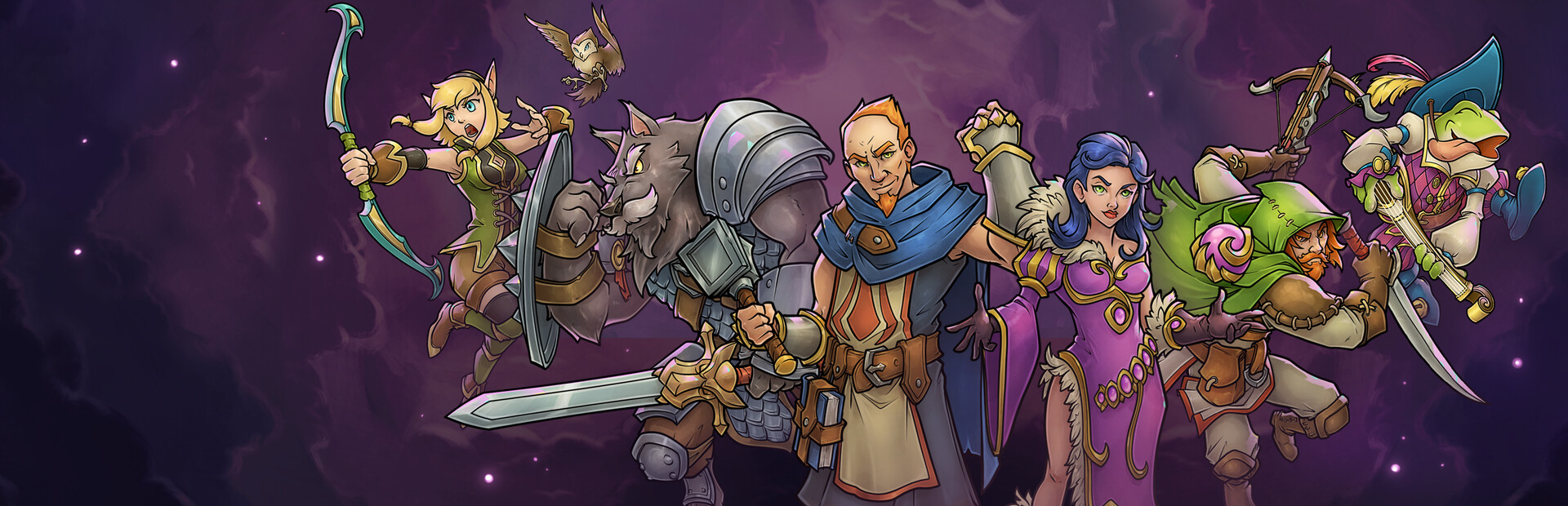
Wield magical dice and build a team of powerful Chimeras to stop a mysterious evil in this tactical roguelite adventure. As a Chimera Summoner, recruit and create your perfect team of mythical beasts and command them to victory using unique dice mechanics.
Our score
Eligible for ranking after all five dimensions are reviewed
Game filed. Review coming soon.
This game has not yet completed our five-dimension review. Explore its details and external material in the meantime.
Video reviews
Reviews and deep dives from YouTube and Bilibili, in every language. Open the original video to watch.
Other voices, for reference.
Archived third-party reviews and community material may refer to different versions. External opinions and ratings are presented separately; consult the original videos for their full context.
Community discussion
A tactical roguelite where you command a team of three Chimeras with dice-driven actions and, uniquely, also play out the enemy's dice each turn.
Dicefolk is well received: Steam shows Very Positive (about 89% of roughly 1,130 reviews), critics land around 78-79 on OpenCritic/Metacritic (generally favourable), and the Switch version scores slightly higher on Metacritic. Praise centres on the clever 'you control both sides' dice combat, charming hand-drawn art and deep Chimera/equipment synergies. The recurring complaints are that runs feel samey, the game leans simplistic and RNG-heavy, and unlocking the large Chimera roster is slow. It is not early access; it released 27 Feb 2024 and kept receiving content (a paid Will Chimeras DLC and a large free update), and Steam reviews from 2026 show an active player base.
What players praise
- Signature combat twist: you roll and resolve the enemy's dice too, choosing order, targets and who rotates in, so fights feel like a puzzle where mistakes are your own fault
- Synergy building between Chimeras, equipment and dice upgrades; 'busted' builds and one-turn boss kills feel great
- Hand-drawn art, animations, clear UI with hover text and relaxed music get consistent praise
- Large content pool: 100+ Chimeras (one review counts 129 with DLC), 100+ artifacts, 6 Tribes/classes, multiple challenge modes and difficulty tiers
- Ascension-style difficulty adds buffs as well as challenge, so progression feels less punishing than Slay the Spire for some players
- Less frustrating RNG than typical roguelikes: map always shows shops/upgrade nodes and the dice are manipulable
- Good controller and Steam Deck support; accessible entry point for deckbuilder newcomers
- Meta-goals like tracking which Chimeras you have won with and a compendium drive long play sessions (reviewers report 50-120 hours)
What players criticize
- Runs feel too similar; several reviewers quit after 3-10 runs because biomes, encounters and starting Chimeras vary little
- Chimeras feel disposable: you keep swapping earlier ones for later finds and they do not grow in a meaningful way, which undercuts the creature-collector fantasy
- Balance problems: some Chimeras and items are far stronger than others, and at high difficulty/modifiers some fights can become effectively unwinnable through bad random modifier combinations
- Heavy RNG and thin decisions for some players: synergies are luck-dependent, and 'safe common synergies' become the default strategy
- Battles can drag: long stretches of neutral actions and high Guard-dice uptime make many turns slow attrition
- Narrative and world-building are thin; critics (Hardcore Gamer, Softpedia) note the lack of a compelling story
- Some call it derivative or simplistic, with mediocre monster design compared with Pokemon or top deckbuilders
- Price ($14.99) seen as steep by several negative and even positive reviewers (who suggest $7-9 or wait for sale)
Distinctive features
- You play both sides of each turn: the enemy's dice actions must all be used, so you choose how to minimize damage to yourself
- Dice replace cards as the core resource; you upgrade and modify dice faces rather than build a deck
- Three Chimeras rotate in a circular formation with leader position mattering
- Creature-collector theming (shiny variants, shrines, compendium) fused with a Slay the Spire-style roguelite map
- Items that carry downsides or curses, including one-time items that hurt now for permanent buffs, plus ascensions that grant buffs
- Pokemon-adjacent cute aesthetic with non-pixel hand-drawn art
Divided opinions
- Controlling the enemy's turn: praised as a fresh tactical puzzle by most, but a few compare it to 'playing chess against yourself' and find it laborious
- Difficulty: some find it forgiving and refreshing (winning early), others find it too easy to beat on the first try and less replayable
- Replayability: 'endless' synergy experimentation and 100+ hour playtimes versus 'runs all feel the same'
- Value: great at a sale or bundle price, too expensive at $14.99 for some
Repetition and friction
- Grinding to unlock all Chimeras (one reviewer needed 10+ hours for the last compendium entry)
- Long fights from repeated Guard/neutral actions and the amount of healing across artifacts
- Repetition after the first handful of runs: same starting creatures and similar map flow
- Losing earlier Chimeras as stronger ones replace them, making early-game picks feel meaningless
- Randomly generated enemy modifiers and boss effects that can invalidate a build at high difficulty
- Some players feel the core loop becomes number-crunching 'math micromanagement'
Hoped-for improvements
- Make runs more varied: more distinct biomes/encounter types and more differentiated starting teams
- Let Chimeras grow or be invested in during a run (training/upgrading, or a catching mechanic) so attachment is not lost
- Speed up the unlock curve for Chimeras so experimenting with only three per run is not so slow
- Rebalance weak items/Chimeras and guard against unwinnable modifier rolls at higher difficulties
- Shorten combat (cut neutral-action padding, tune Guard/healing stacking) and add a faster animation option
- Fix map pathing annoyance (cannot change route once a destination is clicked), noted by MP1st, and add PC-specific options like rebindable controls (raised by one negative Steam review)
Released 27 Feb 2024 on PC (Steam, Windows only) and later on Switch; store listings also show iOS/Android. Critics were generally favourable at launch (OpenCritic 78, 80% recommend, ~24-25 reviews), with top scores from God is a Geek, Nintendo Life, TheSixthAxis and Gaming Nexus, and lower ones from Metro GameCentral and Pure Nintendo citing randomness and shortcomings. Metacritic user score is based on only 7 ratings (6.9), so it is not meaningful. The Will Chimeras Pack DLC (21 spellcasting Chimeras, 10 equipment) launched on Switch 24 Oct 2024 at $6.99 alongside a large free update (13-challenge special mode, 70+ equipment, four bosses, Fortune Talisman). Steam reviews through 2026 include 100+ hour players, and the store page shows ongoing art refreshes. Revenue estimates are rough (steam-revenue-calculator: about $237k gross, about $70k net; SteamSpy owners 50k-100k), not audited. A few negative Steam reviews call it a mobile port 'dumped' on PC and complain of missing PC settings.
Community sources
- Local Steam top helpful positive and negative English reviews (appid 1996430) ↗
- Local Steam store/review summary, SteamSpy owners, revenue estimate ↗
- Steam store page (Very Positive, $14.99, developer LEAP Game Studios / Tiny Ghoul, publisher Good Shepherd) ↗
- OpenCritic score 78, 80% recommend, outlet scores and verdicts ↗
- Metacritic PC Metascore 79 from 16 reviews, user score 6.9 from 7 ratings, critic complaint summaries ↗
- Metacritic Switch listing (81, 5 reviews per search snippet) ↗
- MP1st 8.5/10 review: both-sides dice combat, map pathing complaint ↗
- TechRadar review (search snippet): repetitive content, good in small doses, Steam Deck verified ↗
- God is a Geek review (search snippet; page blocked on fetch); 9.5/10 per OpenCritic ↗
- Will Chimeras Pack DLC and free update details on Switch ↗
- Revenue estimate (Boxleiter-based, approximate) ↗
Archived creator commentary 1
Third-party summaries based on automatic captions may contain transcription or interpretation errors.
Tier list Part 3 (2025)
Dicefolk is a turn-based deckbuilding-style roguelike where you run a team of three creatures (chimeras) and roll dice each turn to decide actions and positioning. He likes its cute-but-serious art style and its distinct gameplay, and finds the synergy-building satisfying. He finds it forgiving and fairly easy once the mechanics click. The main faults are a slow start with throwaway temporary creatures and a repetitive back half once a winning trio is locked in. Overall he calls it really solid and rates it B tier.
What the creator praises
- Cute art style and vibe that still takes its story and characters fairly seriously
- Unique dice-driven gameplay that feels different from the very start
- Positioning of the three chimeras affects abilities, so switching and manipulating ally/enemy positions is strategic
- Most dice faces give some benefit, so you rarely get screwed by a bad roll
- Chimera abilities and item pairings allow very different builds; great feeling when a synergy comes together
- Strong replayability because each run's creature lineup feels different
- Plenty of content: events, berries, equipment, shops, new dice
Issues raised by the creator
- Slow start: you begin with temporary creatures you do not care about until you find your first real chimera
- Once you find your three-creature synergy (often by the second biome) there is no reason to change strategy, so the rest of the run is repetitive
- Somewhat easy and forgiving once you understand the mechanics, with weak enemy dice
- The enjoyable sweet spot in the middle feels too narrow; he wishes it were expanded
Design observations
- Dice faces determine your available actions each turn, and you can choose which die to use, including the enemy's dice
- Three-creature team with front-line positioning that interacts with abilities
- Builds revolve around chimera synergies, such as movement-triggered buffs or damage-triggered effects