 Game file / ROGUE BY ROGUE
Noita
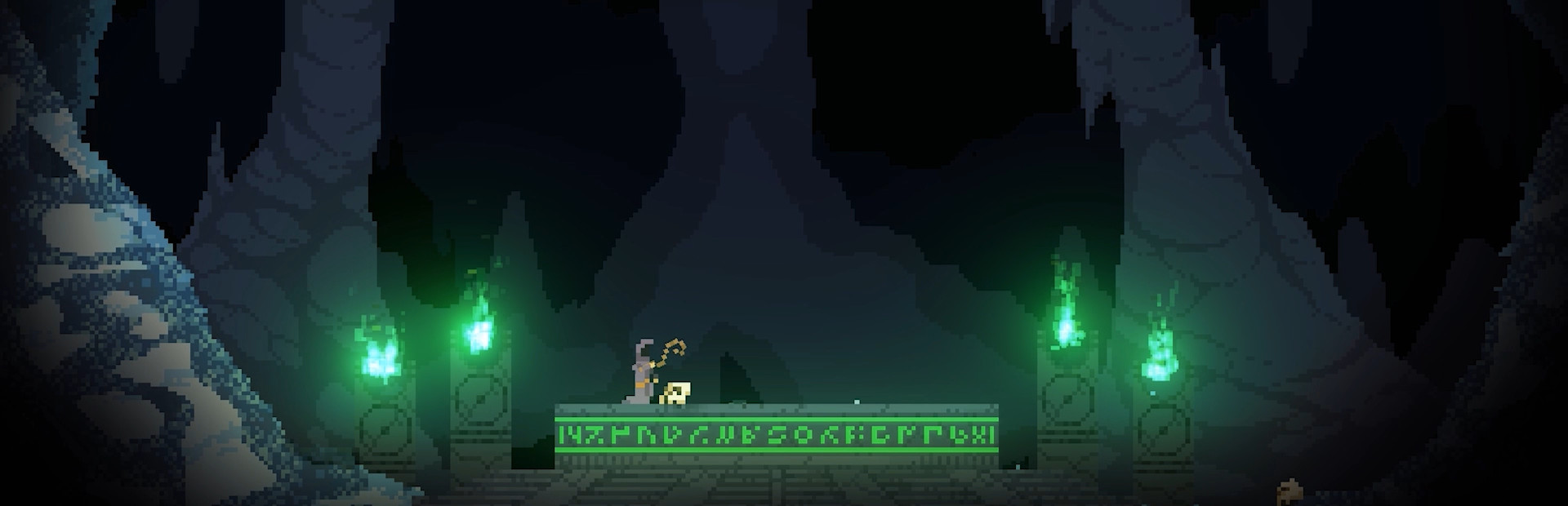
Noita is a magical action roguelite set in a world where every pixel is physically simulated. Fight, explore, melt, burn, freeze and evaporate your way through the procedurally generated world using spells you've created yourself.
Why this score?
Original text · Simplified Chinese
法杖编排和可破坏环境提供极强的实验空间,但危险信息与学习门槛让失败未必能直接转化为理解。
Core gameplay
Weight 25%8.5 / 10Original text · Simplified Chinese
材料燃烧、流动和爆炸让移动与施法不断产生可利用的局势,实验反馈鲜明;缓慢的前期搜集拖慢部分重开。
Builds & strategy
Weight 25%9.5 / 10Original text · Simplified Chinese
法杖中的触发、修饰与多重施法能组合成不同解决方案,地形破坏也是策略资源;深度强但机制需要大量外部学习。
Replayability
Weight 20%9.0 / 10Original text · Simplified Chinese
生成世界、物质反应和隐秘区域让新局有新的探索与应对,而不只是换数值;部分谜题的重复试错成本较高。
Randomness & fairness
Weight 20%5.5 / 10Original text · Simplified Chinese
知识与预备方案能够提高生存率,但屏外攻击、变形和微小危险像素会造成难以预判的死亡,试验法杖也可能立即自毁。
Polish & usability
Weight 10%6.0 / 10Original text · Simplified Chinese
物理反馈清楚且有模组支持,但关键信息隐晦、法术整理和有限库存增加操作负担;没有足够依据把模拟复杂度等同稳定性。
- Reviewer
Original text · Simplified Chinese
Rogue by Rogue · AI 资料评测- Version reviewed
Original text · Simplified Chinese
具体构建未知;以所引资料描述的版本为准
Scope and limitations
Original text · Simplified Chinese
未进行试玩;分数是依据已收录评述与社区具体反馈作出的主观资料评测。旧反馈跨版本、部分原始材料为不可重开的本地快照;本次 Steam 核查仅确认玩法与功能,未复测平衡、性能或报告的故障是否仍存在。
Review sources 02
- 01Archived materialView archived external material ↓
Original text · Simplified Chinese
收录评论与社区资料(2026-10-01 快照)
使用 作者观点摘要 的 Tier list Part 1 (2023) 的具体优缺点,以及 玩家好评、玩家批评 与 资料核查说明;不使用旧等级、外部分数或销量反推。
- 02Web sourceView original ↗
Original text · Simplified Chinese
Noita · Steam 官方商店
2026-10-08 访问。Steam 商店核对逐像素物理模拟、随机世界、自制法术和 Steam 创意工坊支持。未据商店介绍推定性能或故障已修复。
Video reviews
Reviews and deep dives from YouTube and Bilibili, in every language. Open the original video to watch.
Other voices, for reference.
Archived third-party reviews and community material may refer to different versions. External opinions and ratings are presented separately; consult the original videos for their full context.
Community discussion
A physics-sim action roguelite from Nolla Games where every pixel is a simulated material and you build your own spell wands to fight and dig through a procedurally generated underworld.
Players rate Noita extremely highly (Steam: Overwhelmingly Positive, about 95% of roughly 89k reviews, with recent reviews still around 92%), and many long-time players call it one of the deepest games ever made. Critics were favorable but more mixed than players: Metacritic sits at 76 from 20 reviews, with scores ranging from 95 down to 45, mostly split on whether the randomness and lethality are a feature or a flaw. The recurring split is between admiration for the wand-building and pixel-physics depth and frustration with one-shot deaths, hidden knowledge and slow early-game loops. It left early access on 15 Oct 2020 (early access began 24 Sep 2019); the developers shipped the Epilogue update in March 2021 and a second Epilogue update in April 2024, plus ongoing bug fixes and strong mod support. It is not abandoned, though major content updates are rare.
What players praise
- Fully simulated pixel physics: every pixel of sand, water, lava, acid, gas and fire reacts, so the world can be burned, flooded, melted or blown apart
- Wand and spell crafting is hugely deep, with a very high skill ceiling; players describe building absurdly overpowered wands, black holes and infinite-heal setups
- Enormous depth of secrets, alchemy, lore, puzzles and hidden content that the community is still uncovering years later (one reviewer with 1,000+ hours says mysteries remain)
- Emergent, funny and spectacular deaths and moments; the chaos is often described as a large part of the fun
- Huge replay value and the sense that you yourself improve since there is no persistent character power progression
- Distinctive pixel art and particle effects that make the physics visually satisfying
- Strong modding scene and Steam Workshop support extending the game
- Rewarding 'breaking the game' fantasy: late runs let you become a near-unkillable god after struggling early
What players criticize
- Extremely punishing, often feels unfair: instant deaths from off-screen fast projectiles, single pixels of lava/acid/fire, polymorph, or accidentally hurting yourself with your own wand
- Very little is explained; much of the knowledge needed to play well is hidden or requires a wiki, leading many to say it needs 50-500 hours before you feel any agency
- High variance and randomness: several critics and reviewers say outcomes depend heavily on lucky early spells and wands rather than pure skill
- Long, slow early game that you must repeat after every death, with enormous levels to crawl through for gold
- Secrets and quests are cryptic (ARG/cryptography-style) and often require tedious trial and error or outside resources
- Inventory is small relative to the number of spell options, making optimal experimentation feel like a walking and swapping chore
Distinctive features
- Every pixel is an individual physically simulated material, unlike tile-based roguelikes
- Wands are built from modular spells with modifiers, triggers and multicasts, closer to programming than picking items
- A hidden alchemy system and layered secrets, including multiverse and 'new game plus' style content beyond the obvious ending
- No persistent character upgrades; progression is entirely player knowledge plus what you find in a run
- Made by veteran indie devs (Petri Purho of Crayon Physics Deluxe, Olli Harjola of The Swapper, Arvi Teikari/Hempuli of Baba Is You), and praised as a technical showcase (GDC Best Technology nominee)
- Fully destructible world where digging, flooding and explosions are core strategies, not just scenery
Divided opinions
- Difficulty and opacity: fans call it resilience-building and rewarding, detractors call it vindictive and time-wasting ('the community has Stockholm Syndrome' is a representative complaint)
- Luck versus skill: long-time players say skill and knowledge dominate and luck is minor, while critics and some players say early runs depend on random lucky drops
- Hidden knowledge as a feature: many see the wiki and community-solved mysteries as part of the magic, others see it as a design failure
- Critic reception: GameGrin gave 95 and Attack of the Fanboy 90, while GameCritics gave 45 and DarkZero 60, showing a wide critic split
Repetition and friction
- Repeating the first mines area hundreds of times; several reviewers spent most of their time in it and found it dull after many runs
- Crawling through huge levels clearing enemies for gold, with hours of tedious re-exploration after a cheap death
- Secrets hunting and cryptic puzzles that feel like wasted time without a guide
- The first boss ('tutorial boss') taking players dozens or even hundreds of runs, which some find off-putting
- Walking back and forth to swap wand and spell loadouts because of the small inventory
- Feeling underpowered even while dealing large damage, due to fragile health and one-shot hazards
Hoped-for improvements
- Better onboarding and in-game explanation of wand building, materials and core systems so players are not forced to use a wiki
- A minimap or better navigation and possibly some fast-travel or shortcut to cut down on re-traversing huge levels
- Less punishing instant-death sources or clearer telegraphing of off-screen and one-pixel hazards
- Ways to skip or vary the early game and first-biome loop after repeated deaths
- More inventory or quality-of-life for swapping wands and spells while experimenting
Launched in early access in Sept 2019 and reached 1.0 on 15 Oct 2020, then got the Epilogue update (30 Mar 2021) and Epilogue 2 (8 Apr 2024). Accolades include 2019 IGF finalist in three categories, a 2020 GDC Awards Best Technology nomination, a 2020 Steam Awards Most Innovative Gameplay nomination, and Finnish Game Awards Game of the Year 2021. Critics landed at Metacritic 76 (20 reviews) while players sit around 95% positive on Steam, so players have been notably warmer than critics. Platform is Windows on Steam (also playable on Steam Deck per the wiki); no native Mac/Linux. Price is about $19.99. Some OpenCritic and Metacritic detail could not be retrieved directly, so the OpenCritic recommend rate is taken from Wikipedia and the top-critic average is unknown. The revenue and owner figures are third-party estimates, not audited.
Community sources
- Local file of top helpful positive and negative English Steam reviews (used for best/worst/tedious themes) ↗
- Local Steam data: appid 881100, 95.1% positive of 89,036 reviews, price, SteamSpy owners, revenue estimate ↗
- Metascore 76 from 20 critics, user score 8.1, individual outlet scores and blurbs ↗
- OpenCritic 74% recommend, awards, release and Epilogue update timeline, critic outlets Edge 8/10 and GameSpot 7/10 ↗
- Steam store page: review summary, recent review percentage, developer background ↗
- Official-style community wiki overview, release history, Steam Deck availability ↗
- Third-party estimated gross and net revenue for Noita ↗
Archived creator commentary 1
Third-party summaries based on automatic captions may contain transcription or interpretation errors.
Tier list Part 1 (2023)
Noita is a roguelike where every pixel/particle is physically simulated, and you descend a huge mountain-like world as deep as you can. He calls it extremely punishing, possibly one of the hardest roguelikes ever, with a wand-building spell system that produces wild and often lethal interactions. He admires the depth of hidden secrets and the dedicated community, and he met the developers at GDC years ago. He places it in A tier but wouldn't recommend it widely because it demands serious commitment.
What the creator praises
- Fully simulated particles make fire, water and other materials behave in distinctive, realistic ways
- Enormous number of secrets and things to discover, with a very committed community
- Wand crafting where spells interact in unexpected, creative ways
- Difficulty is deliberate and part of the design
- Permadeath feels less painful than in Darkest Dungeon since you never get attached to a character
- Fans love it intensely
Issues raised by the creator
- Extremely punishing and brutal, which limits who it suits
- Experimenting with an untested spell combo can kill you instantly, even 30 minutes into a run
- Demands a big time commitment, so he won't recommend it to many people
- The simulation concept alone could not carry a whole game (implied need for other layers)
Design observations
- Every particle in the world is simulated, enabling emergent physics interactions
- Around a hundred secrets intended to be nearly undiscoverable, taking years to understand
- Dying to your own spell experiments is an accepted, expected part of the loop