Enter the Gungeon beginner guide: movement, dodge rolls and blanks
Your first goal is to leave a fight with fewer avoidable hits, not to memorise every gun. Start by looking for safe space, roll when a bullet pattern blocks that route, and use a blank when you cannot find a safe answer. This guide covers the early, ordinary single-player loop of the Steam PC base game, without secret-floor routes or special-mode rules.
Choose where to go before pressing roll
Keep some attention on the space around your character while aiming. If a small sideways movement clears the incoming shots, walking preserves your freedom to adjust. Avoid backing into a corner just to maintain continuous fire; removing one enemy can open space, but chasing a target through crossfire can close it again.
Developer Dave Crooks explains that invulnerability covers the first half of a dodge roll, and damage becomes possible again on landing. Check the destination as well as the bullets you intend to cross. Rolling through one wave into another is not a safe escape simply because the start of the move was protected.
Use a blank before the mistake becomes damage
A blank clears enemy projectiles from the room. When a pattern closes around you and there is no clear landing space, use one while it can still prevent a hit. Learn its input before a boss fight so that reaching for it is a deliberate action rather than a search for the right button.
The developer’s starter guide describes the normal refill: entering a new floor brings your stock up to two if it is below two. It does not mean two are added to whatever you carry. This makes hoarding every blank a poor practice target for a beginner; judge whether using one would protect the current attempt. Special items and modes can change the baseline.
Let ammunition solve a real problem
Try a newly found gun where you can observe its firing behaviour, reload and reach. Then give it a job: handling a crowded room, reaching a distant enemy or dealing with a boss. Check ammunition before a demanding fight, and reload during a safe interval instead of discovering an empty magazine under pressure.
Conservation is useful only if it does not cost more health than it saves. If a familiar weapon handles a room comfortably, keeping ammunition for later makes sense. If it leaves enemies surrounding you, use a stronger option now. Neither “always save the good gun” nor “empty everything immediately” explains the situation well.
Choose by what you enjoy
| Game | Choose it for | Consider before choosing |
|---|---|---|
| Enter The Gungeon | You are learning ordinary rooms and the first boss encounters. | Secret routes and advanced resource tricks can wait until this loop feels familiar. |
Enter The Gungeon
You are learning ordinary rooms and the first boss encounters.
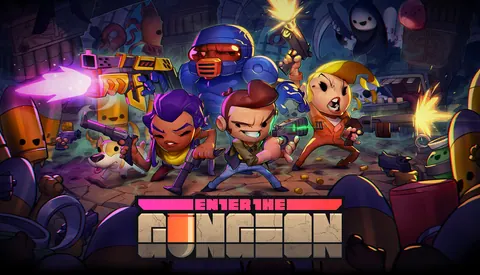
For the next attempt, keep the same familiar character and practise one change: make a small movement before considering a roll, check the landing spot, or use a blank when trapped. After a hit, identify whether you missed a projectile, chose a bad destination or delayed a resource. That gives the next attempt a concrete purpose.
Longer-term unlocks also matter, but understand what they provide. The developer describes the Breach shop as adding purchased guns and items to the future loot pool. An unlock is another possibility, not a promise that the next run will hand you that weapon.
Review one decision, then try again
Before entering another room, check your space, weapon and emergency option. After a failed run, choose one repeatable mistake to work on. These habits help separate a positioning problem from an ammunition problem without requiring a particular item combination or promising a clear.
Frequently asked questions
Should I dodge-roll every time I see bullets?
No. When ordinary movement leaves a safe gap, use it. Roll to cross a threat when you have checked the destination; the vulnerable landing matters just as much as the protected opening.
Should I save all blanks for later floors?
Not automatically. The ordinary refill brings a low stock up to two at the next floor, rather than adding two each time. A blank that prevents a hit now can be more useful than an unused reserve when the run ends.
Sources and scope
Based on the sources below, checked on the dates shown; recommendations about fit are editorial judgments, not a hands-on play report or a difficulty measurement. This guide covers the named games, not their sequels. See each game page for review evidence.