Tower Defense Roguelikes: Build Mazes in Emberward or Expand Routes in Rogue Tower
If placing towers along a fixed road feels too restrictive, start with how much control you want over the road itself. Emberward suits players who want to assemble a maze from blocks; Rogue Tower suits those who want to defend an expanding, partly unpredictable network. Both mix tower defense with changing options across runs. This guide compares their PC single-player core loops, with recommendations based on those mechanics rather than a promise that one is easier.
Choose the kind of map decision you enjoy
In Emberward, wall-block cards let you shape the maze before battle. In Rogue Tower, you choose where to extend the route, while its new twists and branches are random. That distinction matters more than their shared genre label: one asks how to arrange the pieces you have; the other asks where to expand and how to cover what appears.
A longer path is useful only if it supports the defense. As an illustrative buying question, compare a long detour outside your towers' reach with a shorter stretch covered by several towers. Which layout would you rather spend time improving? This is a way to judge the appeal of planning, not a universal solution to either game's maps.
Watch an ordinary wave before deciding
Look at the preparation, the wave and the next upgrade choice together. Can you see why the player placed a tower there, what happens when an enemy passes it, and which weakness the next purchase addresses? A late-game screen full of projectiles shows the spectacle but hides much of the work that produces it.
Also inspect the current interface at your own resolution: route visibility, tower information and upgrade selection are part of every attempt. We do not use old reviews to certify present-day controls, saving or performance. Check those requirements on the store page and in recent footage if they determine whether you can enjoy a session.
Choose by what you enjoy
| Game | Choose it for | Consider before choosing |
|---|---|---|
| Emberward | You want to construct the maze and fit towers into it | Available block shapes and tower footprints constrain the plan |
| Rogue Tower | You want to react to an expanding route and develop tower upgrades | Choosing an expansion direction does not let you dictate every branch |
Emberward
You want to construct the maze and fit towers into it
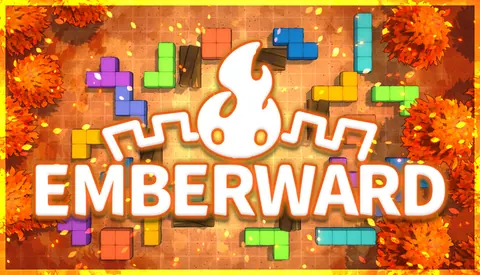
Emberward gives wall placement its own resources: the block cards in your hand. Towers come in different sizes, so laying out a route also means reserving useful construction space. Between battles, runes can modify block cards; towers and relics collected along the journey give you further reasons to rethink the layout.
We recommend it if fitting pieces together sounds as appealing as watching the defense fire. A useful viewing exercise is to pause before a block is placed and identify both the detour it creates and the tower space it leaves. The limitation is that you work with available pieces and rewards. Expect to adapt a layout, rather than reproduce an unrestricted blueprint every run.
Rogue Tower
You want to react to an expanding route and develop tower upgrades
Rogue Tower extends the enemy route as you advance. Your direction choice influences the map, but the path can turn and split. Elevation grants towers a damage bonus, adding another consideration alongside coverage. Random cards and cash improve defenses; experience also unlocks more options and some permanent benefits between runs.
We recommend it if you like reassessing an existing defense as the map grows. Before an expansion, watch which approaches your towers already cover and where a new branch could stretch that coverage. You must accept incomplete control over the route and upgrade offers. A preference for a fully planned maze points more strongly toward Emberward.
Choose the planning task you want to repeat
Start with Emberward for block placement and maze construction, or Rogue Tower for route expansion and tower development. Both ask you to make decisions beyond buying the biggest damage number. If you mainly want a permanent town to decorate or direct control of a fighting hero, these particular recommendations address a different wish.
Frequently asked questions
Are these base-building games?
Their relevant building loop is defending against enemy waves. Cross-run progression exists, but the reason to choose them here is route and tower planning, rather than managing a persistent settlement.
Do I build a combat deck in both?
Cards serve different systems. Emberward uses block cards to construct the maze; Rogue Tower offers cards for upgrades and unlocks. Neither should be approached as a conventional turn-based card duel.
Can I use one winning layout every time?
Changing maps and available options are central to both. Learn what makes a position useful, then adapt to the current route, blocks or upgrades. This guide does not promise a layout that wins every run.
Sources and scope
Based on the sources below, checked on the dates shown; recommendations about fit are editorial judgments, not a hands-on play report or a difficulty measurement. This guide covers the named games, not their sequels. See each game page for review evidence.
- Refic Games — Emberward ↗Checked
- Die of Death Games — Rogue Tower ↗Checked