 Game file / ROGUE BY ROGUE
Emberward
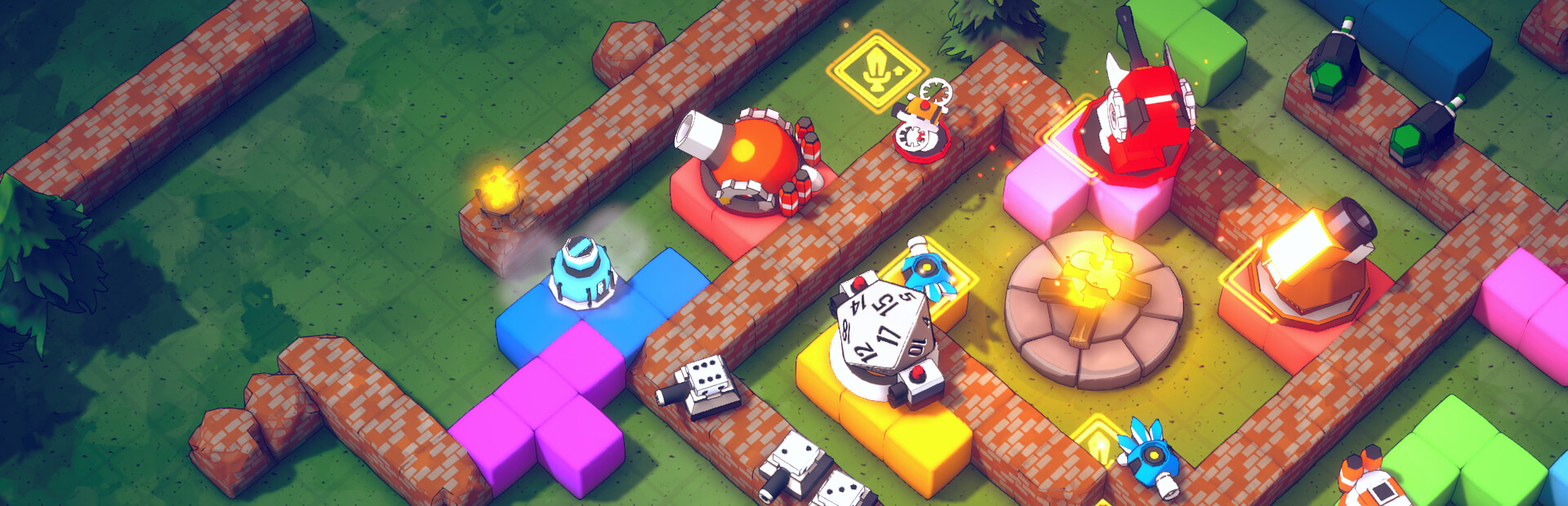
Build twisting mazes with tetromino blocks and deploy unique towers in this strategic roguelite tower defense adventure!
Our score
Eligible for ranking after all five dimensions are reviewed
Game filed. Review coming soon.
This game has not yet completed our five-dimension review. Explore its details and external material in the meantime.
Video reviews
Reviews and deep dives from YouTube and Bilibili, in every language. Open the original video to watch.
Other voices, for reference.
Archived third-party reviews and community material may refer to different versions. External opinions and ratings are presented separately; consult the original videos for their full context.
Community discussion
A roguelite tower defense game by Refic Games where you draw tetromino wall blocks from a deck to build a maze, then place towers, with heroes, flames (starting modifiers), runes and relics across short stages.
Emberward is received as a very well-liked, polished maze-building tower defense game: Steam shows Overwhelmingly Positive (about 96.7% of roughly 4,300 reviews, with recent reviews slightly lower at roughly 94% Very Positive). Praise centres on the tetromino-as-cards mazing, tower variety and a responsive developer who shipped frequent updates through a long Early Access period before the 1.0 release in September 2026. Negative reviews are a minority but consistent: the game is too easy even on the top difficulty, runs and stages feel samey, relics and enemies have little strategic impact, and some felt 1.0 changes were a step sideways. Metacritic and OpenCritic had no critic or user scores at the time of checking, so reception is essentially Steam-player driven.
What players praise
- Mazing as a separate card-based resource from towers (tetromino wall cards drawn from a deck) gives freedom to shape enemy paths, praised as reviving Warcraft 3 custom-map TD nostalgia
- Large variety of towers (single target, AoE, slow, elemental, and odd ones like towers you feed other towers into) plus relics/trinkets and artifacts that open different builds
- Multiple heroes with distinct abilities, varied maps with terrain mechanics, and modes such as Endless, challenges, daily/weekly challenges and leaderboards that extend replay value
- Polish: clean UI, smooth performance, good art/animation/sound on towers and enemies; runs well on Steam Deck and got controller support
- Short-session friendliness: maps can be played in about 15 minutes, with mini-runs for limited time, and a 'just one more turn' pull
- Very active, responsive developer with frequent updates, holiday content and QoL additions (damage-per-turn readouts, block texture cosmetics, talent grid reset)
- Good value for price: reviewers report hundreds of hours, including 500+ hours across Early Access
What players criticize
- Too easy: multiple reviewers say even Heroic is trivial for TD veterans, with generous gold, blocks and rerolls letting you build a rough maze and spam towers; real challenge only comes from self-imposed modifiers, shards or Endless
- Enemy design has little strategic influence; players say they never check what is coming or adjust towers to enemy types
- Relics/perks and run RNG feel inconsequential or obvious picks, and relics and towers rarely interact in meaningful synergies
- Stages and runs feel repetitive: every map starts from one turret and resets, and campaign maps repeat, so the roguelite variance feels shallow
- Balance issues: some builds are far stronger (lightning, torch tower, a single element stacked wins), while the developer's nerfs of fun-feeling towers frustrate others
- Interface/controls complaints from some: imprecise targeting of power-up cards without pausing, cluttered systems, no rebindable keybinds, mobile-like feel
- Missing or sparse patch notes for frequent hotfixes, plus some unclear tooltips (buffs like poison show only a name)
- Small effective tower/enemy pool: several reviewers say most towers are useless so they end up using only one or two, and the same enemies, towers and maps appear even after years of updates
Distinctive features
- Tetris-style wall pieces are cards in a deck you draw each turn, decoupling maze construction from tower placement
- Roguelite structure built from many short tower defense stages with shops, forges and events, rather than one long map
- Flames/shards system to customise starting modifiers and scale difficulty, plus heroes with distinct abilities
- Wide tower roster with oddities such as poison, drone and D20 luck-based towers, plus a tower you power up by feeding it others
- Modes like Endless (80+ stages) and the fast-paced Enigma Sanctum, with daily/weekly challenges and leaderboards
- Card enhancement with runes and mid-wave active options that keep attention on maze and towers
Divided opinions
- Difficulty: many praise accessible, relaxing play and the ability to self-tune challenge, while veterans find it a snooze and cite Defense Grid, Dungeon Warfare 3 or Variables 2 as more demanding
- 1.0 update direction: some say it improved (new stage, towers, QoL), while a 162-hour reviewer felt it less complete and misread Early Access feedback
- Developer balance approach: frequent nerfs and daily hotfixes read as responsive to some and heavy-handed or undocumented to others
- Roguelite structure fit for tower defense: some love the short-encounter variety, others want to invest in a single persistent map
Repetition and friction
- Rebuilding the maze from scratch every stage makes some players feel no attachment to their defences and find runs repetitive
- Mid-to-late waves turn into chucking extra blocks to lengthen the path and placing towers absentmindedly because gold is abundant
- Run length: some find stages too long to feel snappy yet too short to feel like a full experience, while others want shorter runs
- Stale after around 10 to 30 hours for several reviewers who stop because they see the same towers, enemies, and maps
Hoped-for improvements
- Raise the difficulty ceiling and smooth the wave difficulty curve; early waves can need no input and then hit sudden HP spikes mid-level
- Scarcer resources (fewer blocks, less gold, fewer enemies per wave) so placement decisions carry more weight, as one reviewer suggested
- More enemy variety and special enemy mechanics that force different tower choices
- Deeper relic/tower synergies and build-defining items so runs diverge
- Better discoverability: publish hotfix patch notes, clearer buff/effect tooltips, rebindable keys and improved card-targeting UI
- More content depth: more maps, different music (the soundtrack is called generic and repetitive), and meaningful reasons to continue past the victory screen rather than the optional 'more waves' button
Long Early Access period (reviews from late 2025 onward, some with 500+ EA hours) followed by 1.0 on Sep 17, 2026 at roughly $16.99 on Steam (Windows only; mac/linux not supported). Daily-ish hotfixes after launch drew requests for patch notes. Controller support and Steam Deck play were added and praised. Metacritic listed zero critic and zero user reviews at time of fetch, and OpenCritic returned nothing, so there are no professional scores. Web search quota was exhausted, so no outlet reviews or Reddit threads could be read; this summary relies on Steam reviews, the store and community pages, and the revenue estimate site. Figures across snapshots (review counts, price, developer name on the calculator) are inconsistent, suggesting cached pages.
Community sources
- Top helpful positive and negative English Steam reviews (main source for praise and criticism) ↗
- Local Steam metadata: appid 2459550, Refic Games, release date, review totals, SteamSpy owners, revenue estimate ↗
- Steam store page: features, modes, tags, review summary ↗
- Community discussion topics: combos, difficulty of pacts, too many shops, sentiment ↗
- Metacritic page exists with no critic or user scores yet ↗
- OpenCritic search returned no usable Emberward entry ↗
- Boxleiter-method revenue estimate (gross about $809k, net about $239k) ↗
- Steam news page attempted; fetch returned no readable patch content ↗
Archived creator commentary 1
Third-party summaries based on automatic captions may contain transcription or interpretation errors.
Tier list Part 3 (2025)
Emberward is an early-access roguelike that fuses tower defense with Tetris-style block placement: you lay blocks to build the enemy path into a maze, then place towers on it. He thinks the two-layer puzzle gameplay is very enjoyable and that the game improved notably during early access. His main complaints are pacing within the short six-wave levels, being flooded with blocks and money, and low difficulty. He places it on the board with no tier letter spoken, only that it could rise higher if the developers fix his issues.
What the creator praises
- Combining tower defense with Tetris-block path building creates a fresh, puzzle-like maze-building hook
- Relics synergize with specific tower types (e.g. electric towers triggering on poison) without being too restrictive to pursue
- Early-access updates fixed his earlier complaints, including boring relics and too many take-damage relics
- Level restrictions such as frozen zones and the drawing tool for planning enemy routes are great
- Towers are unique and some have placement requirements; block tiles with element boosts reward matching towers
- Boss fights, varied levels, unique starting characters and straightforward meta-progression add plenty of content
- Visuals have a recognizable vibe for a tower defense game
Issues raised by the creator
- Pacing problem inside levels: he is given so many blocks and towers so quickly that by wave five or six he places things randomly
- Hand gets overloaded with blocks and chests give more blocks and money he has no time or space to use
- Towers are shallow: place one and pick one of two upgrades, with no good way to spend the large surplus of money
- Easy for tower defense veterans, winning even on the hardest difficulty while playing sloppily
- Some giant creatures feel out of place visually
- Restarting at wave one each level is inherently awkward for the genre hybrid and leaves the endgame of a level thin
Design observations
- Building the enemy path with Tetris blocks turns level layout itself into a puzzle layered over tower defense
- Runs are compressed to six waves with rapid resource gain as a deliberate fix for tower defense being slow for a roguelike, though it causes pacing tradeoffs
- Genre hybrid is inherently hard: tower defense favors slow buildup while roguelikes favor fast iteration
Updated opinion
He had considered including it in an earlier tier list a few months ago but held off due to issues; it has since improved. Early access, and he says it could rise higher if the developers fix his issues.